Tuesday, October 1, 2019

Mark of the Vampire (1935)

This was a movie that popped up a few times in the books on old horror and monster movies that I often read at the libraries in my area when I was a young kid, namely in any one that talked about Dracula and other such characters. I knew that, despite featuring Bela Lugosi, this wasn't really a Dracula film, but I never quite grasped what it truly was and how the truth about everything was revealed at the end (if those books did mention the twist, I didn't process it at all). Like a lot of those movies I read about, I didn't see the actual movie until many, many years later, though I came very close one time. Halloween fell on a Saturday in 1998 and I can remember getting up and promptly turning the channel to Turner Classic Movies, which had been playing the old Universal movies that month and was going to premier their documentary, Universal Horror, that night. As a result, I caught the very end of Mark of the Vampire, where the actors who played the vampires are talking about their performance, particularly Lugosi, who raves about his performance. Still being fairly young, at just eleven, and having not seen the entire movie, I didn't understand the meaning of the dialogue and all I saw was Dracula being a whole lot more personable than expected, which made me think this was an instance of him being a good guy. Over the years, as I read more about it, I learned that the film ultimately reveals that the whole thing with the vampires was just a ruse (which is why, as with She-Wolf of London and its lack of an actual werewolf, I didn't give this the tag of "Vampire Flicks,"), much like the film it's based on, London After Midnight, and so, when I finally did get to see the whole thing, I wasn't in a position to be fooled. Speaking of which, I saw it at the very beginning of 2014, in a DVD box-set I'd gotten for Christmas, the Hollywood Legends of Horror Collection, made up of other horror films from the 30's like The Mask of Fu Manchu, Mad Love, and Doctor X (I actually had to get a replacement set in order to see Mark of the Vampire, as the case was missing the disc that came with both it and Fu Manchu!)

Upon watching it that first time, I must admit that I came out of it feeling underwhelmed and more than a little bored. I found it to be little more than a less effective and more overdone version of Dracula, with little of that movie's creepy vibe and ambience; I thought Lugosi, despite giving it his all, as he always did, was rather wasted and not given anything to do other than stalk around, watch people, and menace them now and then; and the twist ending flew in the face of much of what had been seen in the film, not to mention how convoluted and elaborate a ruse it was. In fact, I'd felt that if this was any indication as to what London After Midnight was like, then that movie should probably just stay lost. My view on the film has softened a tiny bit after having watched it a couple of more times since then but, while I can appreciate the acting and the production values, I don't find it to be a classic at all and, if it weren't part of a nice set, I would have gotten rid of it.

1934. In a small Czech village that the superstitious natives believe is plagued by vampires, nobleman Sir Karell Borotyn is found dead, his body drained completely of blood, with two small wounds on his neck. Though it's generally believed to be the handiwork of the area's supposed vampires, Prague police inspector Neumann isn't at all convinced, nor is the coroner, and the cause of death is ultimately ruled as unknown. One year later, Sir Karell's distraught daughter, Irena, is now living with her guardian, Baron Otto von Zinden, and despite her grief, is preparing to go ahead with her plan to marry her fiance, Fedor Vincente. However, Fedor appears at the house one morning, very bedraggled, claiming to have fallen near the old, abandoned castle where Sir Karell was found dead, and to have laid unconscious for hours. It's discovered that he has two small wounds on his neck as well, and soon, Count Mora and his daughter, Luna, the two vampires believed to haunt the area, make their presence known, with Irena being targeted by them. With that, Prof. Zelen, an authority on the occult, is called in Inspector Neumann, and though he hoped the professor would help him uncover the truth of what's going on, he instead confirms the general consensus that the attacks are the work of vampires. Zelen then takes the necessary steps to try to protect Irena from the monsters' continued attacks, with Neumann and Baron Otto gradually becoming believers themselves, especially when it seems as though Sir Karell himself has returned from the grave as one. However, as events unfold, it's possible that not all is at it seems...

By the time he got around to directing Mark of the Vampire, Tod Browning's career was very much on its last legs, especially after the massive critical and commercial failure of Freaks in 1932. As a result of that debacle, Browning no longer had any creative control and became a director for hire, following up Freaks with Fast Workers, a romantic drama starring John Gilbert, Robert Armstrong (Carl Denham in King Kong), and Mae Clarke (Elizabeth in James Whale's Frankenstein). Mark of the Vampire was the film he made after Fast Workers, with MGM (who, amazingly, didn't drop him like a bad habit after Freaks) allowing him to remake London After Midnight, which he had originally made for them in 1927 with Lon Chaney. In doing it as a sound film, he seemed to be intent on making it more of a spiritual successor to Dracula, as it's very much covered in the trappings of that much more well-known movie. Plus, Bela Lugosi's character being revealed as simply being a vampire impersonator as part of a murder investigation, which is essentially the same course of action taken by Chaney's character in London After Midnight, is an interesting instance of things coming full circle, as Chaney was Universal's first choice for Dracula in the 1931 film but his premature death in 1930 made way for Lugosi. In any case, while Mark of the Vampire did fairly well with both critics and audiences when it was released in April of 1935, it did nothing to rejuvenate Browning's floundering career. He would make only two more films afterward and the very next one, 1936's The Devil-Doll, would be his last horror film.

Though the character that Lon Chaney played in London After Midnight was both a detective and a vampire impersonator, in Mark of the Vampire, the role is divided up among several different characters, specifically two investigators and another actor masquerading as a vampire. One of the investigators is Prof. Zelen (Lionel Barrymore), an expert in the occult who arrives on the scene after Irena Borotyn is first "attacked" by the vampires. Upon hearing her story, Zelen proceeds to confirm what just about everyone else has suspected is the culprit, much to the apparent annoyance of Inspector Neumann, who says he brought him in to uncover the real truth behind the strange goings on. For 90% of the film, Zelen acts as this film's version of Prof. Van Helsing, coming off as an academic who knows all there is to know about vampires, spouting a lot of exposition about what they are and how they operate to those not in the know, and trying to make the others understand the best way to defend themselves against them. After several more repeated attacks on Irena, and after she is taken by the vampires, Zelen goes to the rundown castle with Neumann and Baron Otto von Zinden to find and kill them. However, once he and the baron are alone, Zelen uses hypnosis on him and guides him to the room where Sir Karell Borotyn was killed, where everything has been set up to recreate the conditions on that night. Not only is it then revealed that the whole vampire thing was nothing but an elaborate charade but that it was an attempt to get Baron Otto, the prime suspect, into breaking down and confessing. Since that hasn't worked, Zelen's hypnotizing him into reliving the events of that night is a last ditch and it ultimately pays off, with the baron being arrested afterward. You may think that this could point to Zelen not really being a professor but an inspector himself; however, I think he really is an academic, with Neumann having called him in to give a feeling of reality to the suggestion that the deaths and strange happenings are the work of vampires. Barrymore plays the role rather well, if a bit hammy in the way he spouts off the info about vampires and tries to convince others that they are real, and has some nicely sympathetic moments when he deals with Irena, particularly near the end of the movie, when she begins to get cold feet about going on with the ruse.

If Prof. Zelen is our Van Helsing stand-in here, then Irena Borotyn (Elizabeth Allan) and Fedor Vincente (Henry Wadsworth) are both the equivalents to Mina Seward and Jonathan Harker, though Fedor has very little to do in the story, unlike his counterpart. Irena is completely shattered by the sudden and mysterious death of her father, which haunts her even a year later, but she intends to go through with her intended marriage to Fedor. However, Fedor is soon attacked near the old castle, appearing at Baron Otto von Zinden's house in a very dire condition, with marks on his neck, and Irena herself appears to fall victim to the vampires' wrath. She's promptly put under Zelen's care, as he tries to guard the house from the vampires, when Fedor, despite not having completely recovered from his attack, visits Irena and, upon learning of what's going on, becomes determined to take her away. Though he ultimately relents to Zelen's insisting that she may remain there, he refuses to leave and, as a result, is swept up in the chaos of the vampires' continued attack on the house. Irena is again visited and victimized by the vampire woman, Luna, while Fedor is seemingly put into a deep sleep by her father, Count Mora. The following night, while Zelen, Baron Otto, and Inspector Neumann inspect the old castle, Irena seems to fall under the influence of Luna, whom she sees outside of her room's window. Acting strangely cheerful, she attempts to send Fedor away, but he begins to suspect that she's hiding something from him and tries to get her to tell him. She seems like she's about to, when she suddenly bolts from the room, locking him in, and is later seen joining the vampires out on the terrace, including her seemingly undead father, who tells her to be brave. Luna takes her to the castle and seems to be about ready to bite her again, when Fedor, who'd followed them, smashes his way in, trying to save her, only to be grabbed by Mora. It's then revealed that Irena has been in on the vampire plot, working Zelen and Neumann to expose Baron Otto, whom she suspected was the murderer after Fedor was attacked, but at the last minute, her nerves almost get the best of her and she comes close to backing out. Zelen and the others are able to talk her into going through with the reenactment of the murder while the baron is under hypnosis, although reliving the last time she saw her father proves to be quite taxing for her emotionally. Once it's all over and Otto is arrested, Irena tells Fedor that they wouldn't allow her to tell him about the plot, as they felt he wouldn't let her go through with it.

Though he tended to get relegated to small, supporting parts, often playing authority figures like Inspector Neumann (especially after he was indicted for perjury in 1941), it's still always nice to see Lionel Atwill, as he tended to come off as a very reliable and trustworthy man. Neumann is a bit blustery and absolutely scoffs at the idea of vampires being behind the strange happenings in the village, let alone the death of Sir Karell Borotyn, but when Fedor and then Irena are attacked one year later, he calls in Prof. Zelen for help. He admits to the professor that he called him in hoping that his expertise could help in finding the "real" culprit, as he still doesn't believe in vampires, and remains skeptical even after he and Baron Otto find that Sir Karell's body has disappeared from its tomb. After another nighttime visit by the vampires, with Neumann firing at them through a window at one point, the inspector takes Baron Otto aside and makes it clear that he still isn't convinced of what's going on. It's only after the two of them go to the castle and see Sir Karell sitting at his old organ, playing, as the other vampires stand about, that he seems to become a believer. He suggests that Irena could have some influence over her father, but when both Zelen and Baron Otto oppose the idea of letting her know that her father is even part of it, he tries to call headquarters for help, before being told that such force would do no good. He then considers leaving with Baron Otto the next morning but, after another visit from the vampires, Zelen tells him that Irena is under their power and that they must find and kill them in order to release her. To that end, the next day, Neumann joins Zelen and Baron Otto in searching the castle for their resting place, but they get separated in the dark vaults beneath it. Neumann doesn't appear again until near the end of the film, when he and the actor playing Sir Karell try to convince Irena to go through with the reenactment of the night her father died, as per their plan. Once she gets her nerves about her again, and Zelen brings the hypnotized Baron Otto to the room, Neumann and the professor watch as he relives his murdering Sir Karell, the inspector promptly placing him under arrest after Zelen snaps him out of the trance.

At first glance, when he tells the servants of the castle of Sir Karell Borotyn's death, Baron Otto von Zinden (Jean Hersholt) comes off as a sympathetic, caring man, particularly towards the distraught Irena, whom he takes in upon becoming her guardian and tries to cheer her up whenever she becomes upset. He also tries to get her back to the thoughts of her pending wedding to Fedor, only to become horrified when he shows up after having suffered some sort of attack, with suspect marks on his neck. Despite the fact that the attack took place near the castle, Baron Otto, like Inspector Neumann, remains skeptical of the notion that it's the work of vampires, and writes off his servants' having seen the figure of Luna near the castle as a client of some real estate brokers who he's allowed to lease the place. But, his skepticism starts to crack when, after Irena is herself attacked by Luna, he finds that the castle's new tenant has signed the lease with Sir Karell's name. His nerves start to shatter, particularly after he overhears Irena claiming that she heard her father's voice calling to her, he and Neumann find that Sir Karell's body has disappeared from its tomb, and following the vampires' assault on the house, he, Neumann, and Prof. Zelen see what looks like Sir Karell's figure walking away with them. And, like Neumann, Baron Otto becomes a full-fledged believer when they see Sir Karell sitting inside the castle, playing the organ, as he often did in life, as the vampires stand around him. Continuing to worry about Irena, Baron Otto, along with Zelen, protests Neumann's suggestion that they tell Irena of what they saw so she could have some influence over her father, and also agrees with the suggestion that they surround the castle with police before saying they should all leave come morning. He plans to go through with this escape, but when Irena is again attacked and Zelen tells him and Neumann that the only way to save her is to find and kill the vampires, he accompanies them to the castle the next day. There's a moment where they Sir Karell as a vampire down in the castle vaults and Baron Otto, overcome with fear, tries to kill him right then and there, but Zelen stops him, telling him that they need to kill all of the vampires at once; otherwise, they'll be stalked by the survivors as long as they live.

When they get separated in the dark vaults, Baron Otto finds himself with Zelen, who tries to get him to go up to the castle's main room to confront Sir Karell. But, when the baron's nerves prevent him from doing so, Zelen uses his candle to hypnotize him into going up there, telling him that it's one year ago. Under hypnotic suggestion, Baron Otto, who's secretly been the prime suspect in Sir Karell's murder, relives the murder: he drugged Sir Karell's drink during a visit with him and, after leaving, watched and waited for him to fall unconscious. Once he did, he came inside, cut open an artery in Sir Karell's neck, and used a heated glass to create a powerful suction over the flesh in order to collect the blood; of course, in this case, the others stop him from killing the actor posing as Sir Karell. It turns out that his motivation was to one day marry Irena himself and so, he killed her father to try to prevent the wedding, which eventually led to him attacking Fedor near the castle and making it look like both crimes were the work of vampires. Ironically, what happened to Fedor is what first made Irena suspicious of him.


Bela Lugosi's appearance in the film as Count Mora is undoubtedly due to the fact that he'd famously played Dracula under Tod Browning's direction but, that's about as much substance to his role as there is, as he and Luna (Carroll Borland) have little more to do than simply lurk around, stalking and glaring at their would-be victims. Between the two of them, Luna is the more striking and creepy one, as she looks like the quintessential vampire woman, dressed in white, with flowing black hair that extends down her front, all the way to her elbows, very pale skin, and blackness around her eyes, and she really looks eerie when she gives off the piercing stare that Lugosi did so well in Dracula. (Such a performance is no coincidence, as Borland had worked with Lugosi on a touring performance of Dracula as a play and became his protege.) On top of that, when Baron Otto and Inspector Neumann see Sir Karell playing the organ amongst the vampires, you see the startling visual of Luna hovering down to the floor, her arms morphed into enormous bat wings, something you don't expect to see in a movie from the 30's. As for Mora, while Lugosi manages to look as striking and iconic as he always did when he played a vampire, he's just not quite as creepy as he was in Dracula. Thinking about why that is, I think it's because, when he watches people, the angry, grimacing faces he makes aren't as unnerving as the stoic, expressionless looks he gave in that film, as well as because he's not really a character but rather just a background menace who rarely does anything really threatening towards anyone, save for charging at Baron Otto's servants at one point or jumping Fedor in the castle near the end. Both he and Luna don't say a word until the very last scene, when it's revealed that they were just actors hired to play vampires (Lugosi speaks far more in the trailer), but that's not an issue, as Lugosi didn't speak all that much in Dracula and, later on, Christopher Lee would have very little to no dialogue when he played the count (though, that said, the lack of dialogue does add to the feeling that Mora is little more than a prop in the overall story). Speaking of that last scene, the actor who was playing Mora proves to be quite a ham, bragging about how great he was in the role, saying that he gave it his all, and that it's given him an idea for a new act, though his colleagues aren't as keen on his exclamations.


In addition to him, the Neumann and the others make use of an actor (Holmes Herbert) who, according to Irena near the end, looks and sounds almost exactly like her father (our only look at Sir Karell himself is after he's been killed, with his head lying face-down on his desk). He plays Sir Karell both as a vampire, when they're trying to scare a confession out of Baron Otto, and as the man himself during the reenactment when the hypnotized Baron relives his crime. It's not clear who this man is, as he doesn't appear to be a part of the acting troupe that the people playing the other vampires belong to, but he really seems intent upon helping to expose Otto as a murderer, going so far as trying to reason with Irena when her nerves almost stop her from going through with it. One thing I don't get about the ruse is why, about halfway into the film, there's suddenly a fourth person (James Bradbury Jr.) pretending to be a vampire. When I first saw him, I thought I'd missed something and that he was meant to be someone else who was supposedly killed by the vampires (such as a farmer who's mentioned at the inquest into Sir Karell's death to have been found dead), as I knew who the others were supposed to be. After a while, it became clear that wasn't the case, so I was thinking, "Who the hell is this guy?" He's later revealed to be part of the acting troupe with those playing the other vampires but, again, who is meant to be in context of the ruse that they're putting on to scare Baron Otto into confessing? Count Mora's undead servant (he does kind of look like a butler)? It doesn't make sense but, as we'll get into, there are a lot of things here that come off as illogical when you put them into context.

When he first appears at the beginning of the movie, jumping out of a carriage and bursting through the door of the village inn as quickly as he can, Dr. J. Doskil (Donald Meek) denies that his speed was due to fear of vampires, which he laughs at and writes off as nonsense but his actions and jittery nature betray his true feelings. Once he's inside his room there, he's shown to be nervously placing the herb used to ward of vampires near the window. The next day, when Sir Karell is found dead, Doskil is on the scene with Inspector Neumann, insisting that the wounds on the nobleman's neck are proof that it was the work of vampires, adding that he's seen such marks before. Unsurprisingly, Neumann scoffs at his claims, and when grilled as to why he didn't come immediately when informed of Sir Karell's death, Doskil claims it was because he knew there was nothing he could do, but it's rather obvious that he simply didn't want to go out for fear of the vampires. As Neumann sarcastically comments, "Oh, I see. You're no moon flower; you're a morning glory." The inspector then orders him to examine the body and find a "real" cause of death, much to Doskil's annoyance, as he doesn't care for being spoken to as if he were, "One of his common policemen!" After he and Jan, Sir Karell's butler, get a scare from a cat that somehow managed to get itself stuck in a suit of armor, he again insists that it was a vampire, given the marks on the neck being the only sign of violence and the body having been totally drained of blood. At an inquest, Doskil tries to convince the coroner of the vampires' existence, speaking to him about a farmer who was once found dead, his body drained of blood as well, but is admonished for it. However, while it takes a year, Doskil finds himself vindicated when, after Irena suffers her first attack, Prof. Zelen informs him that his suspicions were correct. He's promptly told by the professor to get him some of the weed that's used to ward the vampires off but doesn't take part in the proceedings afterward, leaving things completely in Zelen's hands.


Dr. Doskil is far from the only terrified, comic relief type of character the film has to offer. Though he's played as a rather serious but frightened man, Jan (Ivan F. Simpson), Sir Karell's butler, who begins working for Baron Otto after his master's death, does have his comedic moments, like when he and Doskil are terrified by a moving suit of armor that turns out to simply have a cat caught in it. Also, later on, when the vampires begin really descending upon the house, he and Maria, one of the maids, end up unintentionally scaring each other constantly, particularly a moment where, upon hearing a gunshot, Maria screams and runs off, with Jan scrambling after her, asking her not to leave him alone. At the end of the film, Jan, as he was one of the last people to see Sir Karell alive, is revealed to be in on the plot to expose Baron Otto, though exactly when he was made a part of it is up to debate (given how genuinely scared he seemed during those earlier scenes, I have a feeling that they brought him in after all the attempts to scare Otto into confessing failed). Speaking of Maria (Leila Bennett), she's 100% comic relief; a jittery maid who, being new to the area, doesn't seem to believe in vampires, as she teases the terrified driver she's riding with for being as afraid as he is... and then, they come across Luna outside of the castle gates. Freaking out, she grabs at the driver, causing him to panic, and when they reach the house and tell Baron Otto of it, he dismisses their claims, telling them not to mention it to Irena. Maria goes along with Otto's claims that it was probably a future tenant inspecting the castle, though she doesn't seem too convinced, and after Irena is attacked, she and Jan get continually terrified by the vampires as they appear at the house. She and Jan really lose it when Count Mora charges at them down a hall (each time she sees something, she's asked if she's been drinking, since she's been known to spend some time at the inn) and afterward, when Prof. Zelen tells them to search the rooms for the vampires, they're so on edge that the sudden sound of a gunshot from Inspector Neumann firing at one of the vampires sends Maria running in a panic. There's also a moment where Zelen becomes quite irritated with her when she disobeys his instructions and leaves Irena alone to go for some coffee, which seemed to have left her open to another attack. It's never stated but it seems that Maria was hired as a replacement for Annie (June Gittelson), a heavyset maid who, after seeing the marks on Fedor's throat after his attack, runs off, screaming in fear of vampires.

Another connection between this film and Dracula, personnel-wise, is the superstitious innkeeper who, at the beginning of the movie, attempts to warn some travelers about the dangers of journeying through the countryside at night and testifies about the existence of vampires at the inquest. He's played by Michael Visaroff, who also played the innkeeper at the beginning of Dracula who tries to warn Renfield that he mustn't go to Castle Dracula, and serves the same sort of function here but, like before, is dismissed by all the nonbelievers. To be fair, he doesn't exactly help himself at the inquest, as he claims that he's only seen the vampires while they were in their bat forms, meaning that what he saw could have easily been just ordinary bats.


There are just as many parallels to draw between Mark of the Vampire and Dracula as there to London After Midnight, perhaps even more so. If it weren't for the reveal of the whole vampire thing being an elaborate charade, you could look at this film as kind of like what Dracula would have been had that entire film been set in Transylvania. The story hits a lot of the same beats: it opens with villagers who believe that their home is cursed by vampires and try to warn travelers against journeying through the area at night; the first time you see the vampires in question, it's in the rundown, cobweb-filled interior of the castle, with shots of various creatures like possums and spiders crawling around (this is the only movie dealing with vampires from this period that I can think of that features shots of real bats along with the fake ones); a good chunk of the movie's latter half takes place in one house, with our Van Helsing substitute giving much exposition about vampires and the characters discussing what to do in drawing rooms, bedrooms, and the like (to me, those sets themselves are akin to those in Dracula), and with the vampires constantly paying unwanted visits, targeting one person in particular; and the climax takes place in the building the vampires are believed to use as their lair, akin to Dracula's London home of Carfax Abbey. All of the usual ways in which vampires operate and the methods to use against them are mentioned, although the wolfbane from Dracula is replaced with some other herb and Prof. Zelen adds that a vampire's head must be severed, along with the steak to the heart. And while Mark of the Vampire, having been made four years later, has a clearer and crisper soundtrack, it, like Dracula, has no music score to speak of, apart from the opening and closing titles and any music that's played by characters in the film itself.


Being an MGM production, the film definitely had more than enough to work with and comes off as being very classy. It's well shot by cinematographer James Wong Howe (a future two-time Oscar winner) for one, and for another, the art direction by Cedric Gibbons is superb, particularly in the nice-looking, fancy interiors of Baron Otto's house, the rundown, absolutely Gothic interiors of the old castle, and the expanses of the village square and the fog-shrouded countryside, no doubt shot on the backlot. Also, while the film is far from a special effects tour-de-force, with simple effects like dissolves used in one shot of a bat transitioning into Count Mora in a doorway, the shot they created of Luna descending to the floor of the castle's main room, her arms in the shape of huge bat wings, is quite a startling example of mattework (as I mentioned earlier, when I first saw it, I really sat up and took notice, as it was a very unexpected image). That said, the film opens with a very bizarre bit of editing: the first image is a church's steeple and the camera pans down it to reveal the singing villagers below, but the shot suddenly splits halfway, with the daytime shot of the steeple scrolling upward to reveal the nighttime one of the villagers. It's a weird visual to begin the movie with and I'm guessing it was done because they realized too late the mistake they made by not shooting the two elements during the same time of day, had no time or means to correct it, and simply had to make due as best as they could.


The film definitely seems to be trying to capture the Gothic feel and mood that Dracula had, as it's dripping with all of the trappings: creepy, fog-filled countrysides (one of the first scenes is a woman gathering herbs in an old cemetery); the interiors of the old castle being filled with large cobwebs, an old organ, and dark, underground vaults where they're believed to lurk; large prop bats flown through various scenes; the look of the vampires, and so forth. However, as classic as these aspects are, Mark of the Vampire never quite reaches the level of creepiness that Dracula did. For one, while the cinematography is well-done, it's shot in a rather typical fashion, and the attempts at dimly-lit scenes with lots of shadows don't feel as creepy as they could be (ironic, considering how James Wong Howe was considered an expert at photographing shadows). In addition, while the village square that you see during the opening does show off the film's production values, it's not as effectively isolating and creepy as the location work done for the opening of Dracula. Also, all of the nighttime exterior scenes are accompanied by a constant, low moaning/howling sound that I think is either supposed to be the wind or lowing animals of some kind, and while it's clear it's trying to create a mood, it comes off as kind of cliche and cheesy to me. It would have been better if they'd taken the approach Tod Browning did in Dracula, with there being absolute silence for the most part, save for the occasional eerie howl of a wolf. That, coupled with the issues I have with the "vampires," particularly Count Mora, and the story as a whole, makes this is a much less effective film than what they were going for.


We might as well now talk about the most problematic aspect of the film: the twist ending, revealing that everything involving the vampires was an elaborate charade involving Prof. Zelen, Inspector Neumann, and Irena to get Baron Otto to confess his guilt. First off, it must be said that, during the silent era, particularly the 20's, American horror films often shied away from the supernatural, revealing those elements to be some kind of fraud, not only in London After Midnight but in other films that do survive to this day, like The Cat and the Canary. Though he came close to playing Dracula, horror legend Lon Chaney never played a character who was wholly supernatural, as his most famous characters, Quasimodo in The Hunchback of Notre Dame and the eponymous Phantom of the Opera, were merely disfigured human beings, and, in fact, Dracula itself is one of the few films Tod Browning directed where the supernatural was real. But, after 1931, with the advent of both that film and Frankenstein, the supernatural became an accepted part of the genre; as a result, though its twist wasn't unprecedented, it did make Mark of the Vampire feel a tad outdated even at the time. It seems like some of those involved with the film weren't too happy about the reveal, which Carroll Borland said was kept a secret from the cast until the end of shooting, as she and Bela Lugosi both found it to be absurd. Indeed, when you watch the film again with that ending in mind, so many issues come up.


First of all, this plan is so convoluted and depends on so many things going exactly right. If they wanted to scare a confession out of Baron Otto, why all this business with those actors playing Count Mora, Luna, and that other, unnamed "vampire" and the idea that they're targeting Irena? Instead, why not just concentrate on the ruse by making it look like Sir Karell has returned from the dead? In fact, why go with the vampire angle at all? Baron Otto knows he's the one who murdered Sir Karell, so why he would believe that he's returned as a vampire, which can only happen if you're killed by one, which he tries to make everyone else believe? It would have been much more effective to have the actor playing Sir Karell act like he's simply an undead ghoul seeking vengeance on the baron. That brings up another issue: how did they think their plan, as it unfolded, would scare him into confessing? They had the actors playing the vampires continually target Irena, as well as scare the crap out of the servants, whereas Sir Karell's stand-in never goes near the house but, instead, hangs around the castle. How did they expect to get him to confess if he himself was never threatened, particularly by a vengeance-seeking Sir Karell? It's revealed near the end that Irena herself was the one who suspected him after Fedor got attacked, so they figured it had something to do with her, but I don't get how her being threatened was supposed to have the desired effect. While the plan does make Baron Otto a nervous wreck, the only course of action he considers taking is either to surround the castle with heavily-armed policemen or to simply leave come daylight. After that is when they seem to come up with the plan to use hypnosis to make him relive the crime, having him go to the castle with Zelen and Neumann under the belief that they're going to find and kill the vampires while they're sleeping during the daytime. Even here, there are instances where things could have easily gone horribly wrong. While searching the vaults below the castle, they come upon the figure of Sir Karell, sleeping like a vampire, and when Zelen suggests they find the others, the baron panics and comes close to bring a metal rod down on the man. Neumann stops him just in time, with Zelen saying that if they don't destroy all the vampires at once, they're risking fall prey to their endless vengeance, but what if they were unable to stop him? They could have easily gotten that man killed! Right before Zelen hypnotizes Otto into reliving the night he murdered Sir Karell, he tries to get him to go upstairs, where they hear the organ playing, saying that he'd be able to reason with him. While it was a long shot, given how his nerves were shot at that point, what would they have done if Otto did decide to go up there before he could be hypnotized? It would have totally blown the whole scheme. And finally, that reenactment hinged upon everybody playing things out the exact same way it did the night Sir Karell was murdered. They are so lucky that nobody forgot what they did and when they did it, especially given that they're recreating something that took place one year before.


The twist also opens up a lot of gaping plotholes in regards to the "vampires" themselves. If their only purpose is to try to scare Baron Otto into confessing his guilt, why are there so many shots of them watching people while acting all menacingly and eerily wandering around the castle and countryside when there's no one around to see and get creeped out by them? And why is it necessary for them to actually creep up to and appear to feed on Irena, when she could have easily just done herself up to look like she'd been attacked and wait for someone not in on the plot to find her? Furthermore, if these are just actors pretending to be vampires, how are they able to pass through an enormous spiderweb without disturbing it, sit down in the old castle without displacing any of the dust, and apparently go from bats to their human form? You see them packing up some huge bat-wings at the end of the movie, which at least explains the visual of Luna descending to the castle floor with her wings apparently changed into them (practically, there's no way she could have done that so gracefully, but at least they try for an explanation in that instance), but how did the guy playing Count Mora pull off that transition from a bat before he charged down the hall at the servants? In addition, were those large, prop bats you see floating around now and then meant to be real in the context of the film or where they props as well? And what in the hell was that white dog-like thing roaming aroun in the background when Neumann and Baron Otto investigated Sir Karell's tomb? Was that supposed to be a wolf? Also, a farmer who was found on the road, completely drained of his blood, is mentioned during the inquest. If there are no vampires, then what happened to him? Near the end of the movie, when Fedor makes his way to the castle, he sees Luna seemingly attempting to bite Irena, prompting him to break through the window to save her. Again, why was it necessary for her to do that? They had no way of knowing Fedor or anyone else would be there and, furthermore, all it did was make him panic and attempt to save her, causing him to almost compromise the whole thing. And while Count Mora's lunging and grabbing him is undoubtedly to keep him from spoiling the plan, why did Luna hiss like a vampire when he was breaking in? You want to know why it's all done this way? Because it's part of the artifice of movies that's meant to make the audience believe that there are real vampires roaming around, that they killed Sir Karell, and they're now targeting Irena. Tod Browning's reasoning for not telling the actors about the reveal until the end of shooting was supposedly in order to keep them from altering their performances but he didn't seem to take into account, or even care about, how negatively the reveal would affect the story in retrospect. Interestingly, Carroll Borland once claimed that an alternate ending was proposed that alluded to the vampires having actually been real, with Zelen receiving a telegram from the actors saying that they'd missed their train, but Browning rejected it. If that's true then, while it wouldn't have fixed everything (if they had been real vampires, why would they care about helping to expose a murder, etc.), it would have made some elements easier to swallow.


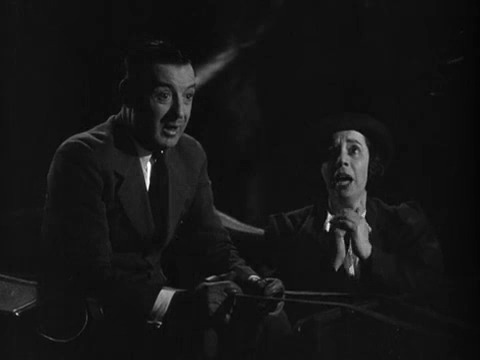
As it stands now, the film is only an hour long, but there is evidence that the first cut of it was closer to 75 or 80 minutes, which has led to much speculation about what exactly was cut. There have been some rumors that the deleted material alluded to possible incest between Count Mora and Luna, as well as an explanation for the bloody mark on Mora's right temple being that he shot himself in the head. However, Gregory Mank, had managed to get ahold of the shooting script when writing his book, Hollywood Cauldron: 13 Horror Films from the Genre's Golden Age, said that, while such a thing was hinted at in the original scenario, it was not in the script itself and, therefore, was never filmed. Given that this was when the Production Code had really started to crack down on adverse content in films, it's very unlikely that MGM would have even allowed such an idea to make its way into the final script, let alone waste money on filming something that they would be forced to remove anyway. One thing I will say, however, is that, incest or not, there is an aspect of the film that is somewhat eyebrow-raising: Luna is always visited and "bitten" by Luna, while Mora, when he's not stalking and frightening the servants, only goes after Fedor, entering the room where he's sleeping in a very menacing way while Luna is going for Irena again. (Incidentally, when the others find him after checking on Irena, they find him to be deeply asleep, which Prof. Zelen suggests was unnatural, i.e. he was hypnotized by one of the vampires. But, since they're not really vampires, what did happen to Fedor? Did they drug him or something?) In any case, it seems like the deleted material most likely consisted of exposition and of more instances of comic relief, possibly involving Maria the maid. Though, I couldn't imagine there being more, given how much exposition is already spouted, particularly by Prof. Zelen, and the funny scenes with Maria that we already have.

Again, the film has no music score, aside from the opening and closing titles and the music and songs sung by some of the characters in the film. The opening music is nothing special at all, nor is the upbeat outro, and the local tune that the villagers are singing in the opening is fine enough but nothing special. However, when "Sir Karell" plays the organ in the castle, it is effectively forlorn and creepy-sounding and actually mixes well with the strange, atmospheric sounds that dominate the nighttime scenes.

Mark of the Vampire may be considered by some to be among the horror classics of the 30's but for me, the movie is far too problematic for me to share that viewpoint. It has a good cast, nice production values, well-done cinematography, a lot of the classic Gothic art direction, and it certainly does try to evoke atmosphere and mood, but the reveal at the end really hurts it, causing so many problems and plotholes when you rewatch it with that in mind. If you know me, you know that I hate it when a twist like that completely flies in the face of what we've seen in a movie and this movie is guilty of that in spades. Some critics have suggested that Tod Browning meant for it to be a satire of the conventions of the horror film of the time (a very early prototype of Scream, in that regard) and that the twist was part of it, along with some of the exaggerated performances, but that doesn't excuse all of those problems, as well as the underuse of Bela Lugosi in the film. On the plus side, at just an hour long, it's not a hard watch at all, and some may be able to look past the twist and enjoy all of the film's nice trappings, but it doesn't work for me.

Monday, September 30, 2019

The Ghoul (1933)

When you have as long and prolific a career as Boris Karloff, it's inevitable that there will be some films that fall into obscurity and that is certainly true of this flick. I first heard of it when it was briefly mentioned on that VHS documentary that I've mentioned many times, The History of Sci-Fi and Horror, and I learned that Karloff co-starred in it with Ernest Thesiger, just a couple of years before they would re-team for Bride of Frankenstein, but other than that, all I basically knew from the documentary was that the movie existed. I virtually heard nothing else about it over the years and never saw it available, save at horror conventions on DVD-Rs that I'm sure were far from the best-looking prints, given this film's public domain status. Since this movie wasn't exactly very high on my pecking order, I never bought any of those copies and didn't see it at all until 2018, when I happened across the 2003 MGM DVD of it at a large used movie and book store in Chattanooga that I often frequent. Going into it, I wasn't expecting much, and at the most, I was just hoping for a nicely atmospheric old chiller, with Karloff as a murderous, undead monster, wiping out a bunch of people. I got half of my wish: the film is certainly atmospheric and moody, with enough dark shadows, fog, and an old, rundown house as the chief setting to make you'd think it was another Universal horror film. However, the plot left a lot to be desired for, as the "ghoul" in question barely has any bearing on the plot (he doesn't emerge from his tomb until after the halfway point), other than shambling around and menacing the other characters, who are all vying for a valuable jewel that was buried with him. That's the main crux of the story, which is not very interesting to watch, and in the end, it's revealed that there was nothing supernatural going on at all. While the movie does have some historical significance in that it was Great Britain's first sound horror film and how, after a reissue in 1938, it was thought to be a lost film, as a good, uncut print of it was not discovered until the early 80's, it's a pretty forgettable movie at the end of the day, with only a scant few memorable aspects.

One night, after unknowingly being spied on from the streets and followed back to his apartment in England, Aga Ben Dragone, an Arab man, is threatened by a knife-wielding Egyptian, Mahmoud, who demands he return an ancient jewel called the Eternal Light. Dragone tells him that he has sold the jewel to Prof. Morlant, a dying Egyptologist who believes that it will grant him immortality through Anubis if he is buried with it. As he lies dying in bed at his dreary, English countryside estate, with his lawyer, Broughton, waiting, Morlant gives his servant, Laing, explicit instructions as to how he is to buried in his estate's Egyptian-themed tomb. He also has Laing place the Eternal Light into his hand and wrap it secure with a bandage, warning him that if it is taken from his grip at any time, he will resurrect and kill the one who has taken it. Shortly afterward, Morlant dies and he is interred per his instructions, but Laing is revealed to have taken the Eternal Light from his grip beforehand. Knowing of the jewel himself, and finding that it's been removed, Broughton has his personal driver, Davis, stay behind and keep an eye on Laing. Laing, meanwhile, hides the jewel in the house and then, after writing a note, has a parcel carrier take him to the nearby train station. That evening, Broughton has a meeting with Ralph Morlant, the professor's nephew, who isn't at all happy about not being informed of his uncle's death, seeing as how he and his estranged cousin, Betty Harlon, are the sole heirs. Despite Broughton's warnings, Ralph decides to head to his uncle's house, and that night, Betty receives a letter from Broughton, telling her of her uncle's death. When she heads out to telephone him about a meeting, Laing approaches her and gives her the note, but just as she can read it, Broughton, who followed Laing after being informed by Davis of his whereabouts, attacks Betty, gets the note away from her, and tears it up. Little does he know that Dragone is nearby and finds the discarded pieces. Betty meets up with Ralph, tells him what the note said about something valuable being hidden at Morlant's house, and, despite their disdain for each other, they decide to go to there, along with Betty's roommate, Kaney. As everyone assembles at the house, it seems like, unbeknownst to them, Morlant's vow to return from the grave on the night of the full moon and kill who took the jewel has come to pass, putting them all in serious danger.

Despite how much it looks and feels like a forgotten Universal horror film, The Ghoul was produced by England's Gaumont-British Picture Corporation, which is probably most well-remembered for producing some of Alfred Hitchcock's finest British films of the 30's, such as The 39 Steps and The Lady Vanishes. It's ostensibly an adaptation of a 1928 book of the same name, which was later made into a play, but its plot just barely resembles its source material, save for some character names, the main setting of a rundown house, an item sought by the "Ghoul," (a MacGuffin, as Hitchcock called it), in this case, a diary rather than an ancient jewel, and the ultimate revelation that there was nothing supernatural going on. Gaumont-British basically took the bare minimum of the book's plot and made their own thing, apparently tailoring it for Boris Karloff by making it The Old Dark House with a sprinkling of The Mummy, both of which he had starred in the year before.

The film was directed by T. Hayes Hunter, an American-born director who began making films in the early 1910's, with some notable works being a 1916 serial called The Crimson Stain Mystery, about a scientist who concocts a formula intended to turn people into geniuses but, instead, create deadly criminals that terrorize New York; Earthbound, a 1920 drama that was lauded in its day for its use of double-exposure; and two 1924 films, Damaged Hearts and The Recoil. Hunter also patented a type of film frame design that allowed advertisements to be displayed in the corners of the frame, making this type of advertising rather novel for its time. In 1927, Hunter left Hollywood for England, his first English film being that year's One of the Best, and he went on to do movies like A South Sea Bubble, The Triumph of the Scarlet Pimpernel, The Man They Couldn't Arrest (his first sound film, in 1931), and The Frightened Lady. The Ghoul ended up being one of his last films, as he only directed three more afterward: Warn London, The Green Pack, and Josser on the Farm, the latter two of which were both released in 1934. After that, Hunter retired from filmmaking and died in London in 1944, at the age of 59.

Though Boris Karloff, as he always did, does the best that he can with it, his role of Prof. Morlant is a pretty thankless one in the grand scheme of things, as it just barely has more to it than that of Morgan, the mad butler that he played in The Old Dark House. When we first see him early on, Morlant is lying in bed, coughing and looking very haggard. He's convinced that he's dying but also that, should he be buried with the Eternal Light in an Egyptian-style tomb on his estate, Anubis will grant him eternal life. He's so certain of this that he's rejected the typical faith of his country, saying, "I put my faith in my own gods," and instructs Laing, the only person he trusts, to wrap the jewel in his gripping hand, place his statue of Anubis in the tomb, and instructs him on how he is to be interred in the tomb following his funeral. He also warns Laing that, should the jewel be taken from his grip, he will come back to life on the night of the full moon and take murderous revenge on those who made off with it. Following that, Morlant seemingly dies and is laid to rest in the tomb, only for it to be revealed that Laing indeed took the jewel from his hand. Eventually, Morlant's threat seems to come to pass, as he emerges from the tomb and, finding the jewel gone, begins stalking the grounds, menacing and attacking those present to get it back (though, he only kills one person). Once he gets it back, he heads back into the tomb and makes a blood sacrifice to Anubis for immortality. Though Anubis appears to accept (it turns out to be a hoax), Morlant dies for good from cutting the god's symbol into his chest and it's later revealed by a doctor whom Ralph had called ealier that he wasn't dead before but, rather, was buried alive due to having suffered from catalepsy.


As you can see, the makeup created for Karloff, by Heinrich Heitfield, is very well-executed, as it truly looks like he's a gaunt, decrepit, dying man, with his face looking not unlike his legendary Frankenstein monster makeup. The fact that Karloff was a pretty thin guy helps immensely, as his chest, when he opens shirt up to cut Anubis' symbol into himself near the end, looks hideously skeletal and malnourished. But, the makeup and the performance that Karloff manages to elicit are about the only noteworthy aspects of Morlant, because after he seemingly dies at the beginning, he doesn't come back for quite a while and when he does, he's little more than a shambling zombie. Moreover, he has almost no significance to the plot that's unfolding, which is all about how all of these characters are either out to get their hands on the priceless Eternal Light or find themselves caught up in their plots. That's where the comparison to Morgan in The Old Dark House comes from: in that film, Morgan, despite how menacing and sinister he is, is really separate from the true meat of the plot and only pops up now and then to threaten the protagonists. This was still fairly early in Karloff's career as a horror star and not that far removed from Frankenstein, so the studios probably didn't yet grasp how talented he was, but, regardless, he deserved better. It would have been interesting to see how he would have played Morlant in a more faithful adaptation of the book, as that character seemed to have a lot more to him. Either that, or at least keep things as supernatural as they appeared to be, which I think would have been a bit more interesting and enable the movie to deliver more on what it seemed to promise.

Ernest Thesiger is best remembered for having played very quirky characters like Horace Femm in The Old Dark House and especially Dr. Pretorious in Bride of Frankenstein but his role here as Laing, Prof. Morlant's servant, is different in that it's a pretty straight role, for the most part. Speaking with a noticeable Scottish accent, Thesiger plays Laing as loyal to his master, despite believing that his faith in Anubis is that of a heathen, and carries out his instructions for his burial with the Eternal Light, despite fearing for his eternal soul. Once Morlant is apparently dead, Laing is intent upon staying with his body until it's interred and you later find out why, as he removed the jewel from his grip before he was sealed in the tomb. Initially, you may think Laing took it for himself but, it's gradually revealed that he did so to ensure that Morlant's heirs would rightfully inherit it. Knowing that he's being watched after the funeral, Laing hides the jewel in a coffee can in the house's kitchen and heads out to personally deliver a note about it to Betty Harlon, unaware that he's being followed by Broughton. On his way back to the house, Laing has some trepidation upon hearing that it's a full moon, as he remembers his master's threat to return from the grave for revenge should the Eternal Light be taken from him. He tries to write it off as nonsense, only to be horrified when sees Morlant emerge from the tomb, running off in a panic at the sight of it. Heading back into the house, he takes the jewel from the coffee can he hid it in and places it in Betty's suitcase, telling him and Ralph to leave as soon as possible. He then prays for forgiveness, saying that he was tempted by the jewel but assures that it's safe. However, when he's then attacked by the seemingly undead Morlant, Laing tells him that "the girl" has it but doesn't specify who he means, leading to Morlant initially targeting Kaney. Near the end of the film, when Ralph decides to investigate the tomb, he learns from Laing that that's probably where Morlant has gone and he has him lead him and Betty to the tomb. When they get close to it, Laing's nerves get the better of him and he goes back to the house, not to be seen again for the rest of the film.

Cedric Hardwicke has an early role here as Broughton, the lawyer who handles Prof. Morlant's affairs. From the outset, he's portrayed as a cold, heartless, schemer, who, on the night of Morlant's apparent death, looks through his study and finds out about the Eternal Light, which he paid 75,000 pounds for. Knowing about it, Broughton becomes suspicious about Morlant's bandaged hand and Laing's determination to stay with the body until it is interred. Before the tomb is sealed, he checks the body's hand and finds that the bandages have been cut open. He questions Laing about the possibility of Morlant having had something valuable in his possession, which the servant denies any knowledge of, and, knowing that he's lying, before he leaves, he has his driver, Davis, remain behind to keep an eye on Laing. Later, when he's dealing with Ralph Morlant, who's irate over not being told of his uncle's passing, he tries to dissuade him from probing into it, telling him that Morlant may not have had as much money as he believes and that he'd best not go to the house, as it wouldn't be comfortable for him. At the end of their tense meeting, Broughton receives a call from Davis, who informs him that Laing has left the house. Broughton follows Laing and, when he gives Betty Harlon a note about something valuable being at the house, he takes it from her and rips it up after reading it. He quickly makes his way back to Morlant's house and tries to find the jewel but is unable to do so before Betty, Ralph, and some other unexpected visitors come calling. He's then forced to handle them, saying that he's there to finish up some business, and keep them from interfering as he continues to look for the jewel. When Laing shows up, scared out of his mind, Broughton takes the opportunity to spy on him to try to find the jewel's whereabouts, only to be quite shocked when he sees Morlant attack Laing. Freaked out at this, he decides to hit the booze, not keeping what he saw a secret from the others, despite their not believing him, and when Betty is attacked by Morlant, Ralph sends him to find Kaney. He then disappears until near the end of the film, when he confronts Aga Ben Dragore, believing that he has the Eternal Light, but when they learn that Kaney has it, they chase after her, leading to a standoff between them when she threatens to drop it down a well. Fortunately for her, the police arrive along with the doctor whom Ralph called earlier and Broughton and Dragore are arrested.

As per usual in films like this, the young couple of the film, Ralph Morlant (Anthony Bushell) and Betty Harlon (Dorothy Hyson), are among the less interesting characters. There is something unique in that, when the movie begins, they're barely on speaking terms, despite being cousins, as the two sides of their family are estranged. Furthermore, Ralph is not too thrilled with Broughton for not informing him and Betty of their uncle's death and decides to run out to Morlant's house, incensed to do so even more when Broughton tries to dissuade him. He also decides to be there when Broughton goes to meet Betty about the situation later that night, and ends up arriving just before Broughton himself assaults her for the note Laing slipped her. As for Betty, she lives in a small apartment with her roommate, Kaney, who gives her the note from Broughton about meeting with him that night and runs out to telephone when she's attacked. Though she and Ralph are still not at all enamored with each other, he goes with her back to her apartment, where he learns of the note, which informed her that there's something of value at Morlant's house. That, coupled with how Broughton tried to keep him away, convinces him that something fishy is going on and he then leaves for the house, along with Betty and Kaney, much to his annoyance. Upon arriving there, Ralph continues to battle with Broughton over what's going on, as well as disagree with Nigel Hartley, a "parson" who shows up at the house, with his believing that Morlant's beliefs and practices were blasphemous, saying that he figures it was harmless if it gave his uncle peace of mind. In spite of their continued arguing, Ralph and Betty decide to bury the hatchet, especially they both now have a feeling that there's something afoot against them. They quickly go from being friendly to romantically interested in each other, and when Laing and then Broughton claim to have seen Morlant rampaging across the grounds, they believe it's a ploy to get rid of them. Ralph decides that the answer to what's going on is in the tomb and decides to go down there, even after Betty is attacked by Morlant, as he doesn't believe there's anything supernatural happening. Before they go down there, Ralph phones the nearby doctor and police, and when they get down to the tomb, they find Morlant dead for real and end up trapped in there by Dragore, who takes the Eternal Light from Hartley, who'd tried to steal it himself. Though Ralph is grazed across the head by a bullet and he and Betty find themselves in a tomb that's rapidly burning, they manage to escape, thanks to some dynamite Hartley had used earlier to try to blow the tomb open.

Kaney (Kathleen Harrison), Betty's roommate, is a rather twittery and overly anxious girl, one who decides to go with her and Ralph to Morlant's house because she doesn't think it's wise for Betty to be alone with a man she's not even speaking with. Once there, though, the creepiness of the place and the weird happenings make Kaney wish she'd stayed home, as she ends up blinding herself with dust when blowing into an old pot and being revolted when a cat she goes to pet turns out to be stuffed. She's rather taken by Aga Ben Dragore when he shows up at the house to visit Morlant's tomb, as he says, out of respect, finding him to be exotic and fascinating, especially when he claims to be a sheik. As a result, she sticks to him like glue, aggravating the crap out of him and often unintentionally stopping him from carrying out his plans, such as when he attempts to shoot Morlant upon seeing him with the jewel. As they roam the grounds together at one point, Dragore manages to shake Kaney by making her close her eyes for ten seconds, which she mistakenly thinks is a ploy to kiss her, and when she runs into him again later, after his struggle with Ralph for the Eternal Light has left him battered and bruised, he pushes her out of the way in irritation. Unbeknownst to him, he drops the jewel and Kaney picks it up off the ground, making her the target of both Dragore and Broughton when they realize she has it. After being chased by them, she threatens to throw the jewel down a well if they come any closer, but fortunately for her, she's saved when the doctor Ralph called arrives with the police. Giving the police the jewel and explaining that it's what they're after, she promptly faints and is carried into the house by one of the officers.


Aga Ben Dragore (Harold Huth) is introduced at the very beginning of the movie, having been the Arab man who first acquired the Eternal Light and sold it to Prof. Morlant. He's followed back to his apartment and threatened at knife-point by an Egyptian, Mahmoud (D.A. Clarke-Smith), who demands he return it, only for Dragore to inform him of Morlant's purchase and that he is going to die soon. Knowing the ritual, they both deduce from this fact that the jewel will be buried with Morlant. Mahmoud is then later shown watching Morlant's funeral procession, as well as Laing and Broughton afterward, while later Dragore comes across the pieces of the torn up note Laing slipped to Betty Harlon. When all of those involved gather at Morlant's house, both Dragore and Mahmoud arrive there, with the former going outside while the latter lies in wait at the treeline, though he's ultimately killed by Morlant when he seemingly returns from the grave. Whether or not Mahmoud forced Dragore to become part of the plot is never made clear but it is clear that Dragore is as interested in the Eternal Light's material value as anyone else. Telling them of how he met Morlant in Egypt some years ago, he says he has come to have a look at his tomb before leaving England, as he believes that's where the jewel is, but relents his desire to do so when Nigel Hartley decries it as paganism. Dragore spends most of the latter half of the film dealing with the unwanted attention of Kaney, whom he humors for the most part and tries to impress as much as he can for her to do what he says. When the two of them witness Laing barging in, scared out of his mind, Dragore tries to follow him but Kaney prevents him from getting anywhere with it, prompting him to separate himself from the group under the pretense of going outside to warn his "chauffeur" of what's going on. He later sees Morlant with the jewel and tries to shoot him but Kaney, again, thwarts his plan. Making her walk with him across the grounds, he manages to give her the slip by asking her to close her eyes for ten seconds, which she does, allowing him to get the jewel from Hartley and leave him, along with Ralph and Betty, to die in the now burning tomb. However, after shoving Kaney out of his way, he realizes too late that he dropped the jewel out of his pocket and he and Broughton chase after her when they see that she now has it. They both try to get it back from her but are arrested when the doctor arrives with the police.


Nigel Hartley (Ralph Richardson), a supposed parson, first appears early on when he arrives at Morlant's house on the night of his impending death, saying that he hoped the professor would repent for his "wicked" ways now that he's so close to dying. When he's told by Laing that there's no hope of that happening, he leaves, but reenters the story later when Ralph Morlant, Betty Harlon, and Kaney meet him right outside the house's gates when they arrive there. He comes off as a decent and cheerful man, albeit one who's very staunch in his beliefs, decrying Morlant's personal faith as blasphemous and refusing to allow Dragore to visit the tomb, an act that he says is paganism. After that, he mainly acts as little more than somebody who's simply along for the ride, so to speak, but when Ralph tells him at one point to mind his own business when he tries to get everyone to get a grip on themselves, saying that they're not in Sunday school. With that, Hartley decides he's not wanted and seemingly leaves, but when Ralph and Betty later find Morlant in the tomb, making his offering to Anubis, it's revealed that Hartley had his hand in place of the idol's, where the professor placed the Eternal Light, per the directions of the ceremony. Simply a thief rather than a parson (how he knew about the jewel is never explained), Hartley tries to make off with it, threatening Ralph with a knife, but he's easily dispatched with a pot to the head. However, Dragore then shows up, takes the jewel, and manages to fight off Ralph and seal them all inside the tomb, which catches on fire from a falling lamp. As the flames spread, Hartley tries to stop the flames from reaching some dynamite that he placed in the tomb's walls from the outside earlier (that's what he'd been doing when they first met him there) but it ultimately blows open a large hole, killing him but creating an exit for Ralph and Betty.


Aside from plenty of good performances, the best thing I can say about The Ghoul is that it's dripping in Gothic atmosphere. As you've probably gleaned from the images I've shown up to this point, the cinematography by Gunther Krampf is very dark and expressionistic to a T, with lots of shadows and contrasts (Morlant's bedroom is given an eerie shimmering effect from the burning fireplace), and it feels as if the entire movie takes place at night. Even Broughton's meeting with Ralph Morlant, the one scene that's possibly meant to take place in the daytime, given how Broughton tells him, "Good afternoon," when he leaves, is filmed in such a way that it still looks as if it's dark outside, and it helps give the film a very gloomy and kind of depressing air to it, although it can sometimes make it hard to tell who you're looking at in a given scene when you first watch the movie. The exteriors of Morlant's creepy old house benefit greatly from the dark cinematography and there's also a scene in the streets that's shot in thick fog, with shafts of light streaming out of the windows of the houses and streetlamps glowing in the darkness, all of which is right out of a Jack the Ripper type of story and makes it come off as especially striking and foreboding. And they also manage to convey the feeling of it being rather chilly outside, with the darkness and the thick clothes that the characters often wear.


In addition to the cinematography, the film's art direction, by A. Junge, also creates a Gothic vibe that's very palpable, particularly with the interiors of Morlant's house. It's your classic dark, dreary old mansion, where the only source of light seems to be from candles and oil lamps, despite the fact that the film does take place in the earl 30's, alluding to just how old and ancient a place it is. It's also a rather dusty and rundown place, hinting that Morlant never truly lived there, and that Laing has maintained it to the bare minimum of livability. Its most notable rooms are the foyer, the very large library, Morlant's upstairs bedroom, and the downstairs kitchen, all of which are often lit as darkly and creepily as possible. Besides its Gothic feel, there's also the hint of Morlant's obsession with Egypt and its beliefs, with the statue of Anubis up in his bedroom and especially the tomb on the grounds, a stone crypt that's adorned on the inside with hieroglyphics on the wall, a coffin for Morlant that's more akin to an Egyptian sarcophagus, a snake-shaped gas lamp hanging from the ceiling (the gear that works it is found on the hillside in back of the tomb), and the Anubis statue, which is moved in there after his death.


While the film takes place in England, there are a few sets that actually remind me of something that you'd see in a German expressionist film, particularly Broughton's office, which you see in the scene where Ralph Morlant calls on him. The primitive way it looks, being a fairly small room with a high ceiling, adorned with a desk for Broughton and shelves behind it that are stacked to the brim with boxes and papers, reminds me of what you'd see in a movie set in an earlier time and made in Germany; specifically, it reminds me of a similar set in The Cabinet of Dr. Caligari, Caligari's office at the asylum (though not nearly as bizarre and warped in how it looks). Also, maybe it's because they're meant to be very low-rent but the apartments that Dragore and Betty Harlon are shown to be staying in also makes me think of sets you'd see in those types of movies, with how primitive and small they are, with almost everything made out of old wood. I don't know why but I expected the decorum and upholstery in 1930's England to not remind me of something older and foreign. But what do I know?


None of these compliments, however, change the fact that I don't find the story to be that interesting. While it is unique to see how the main plot is The Old Dark House with a bit of the Egyptian mysticism of The Mummy sprinkled in (you're not likely to see many movies where an Egyptian-style burial takes place on the grounds of an English estate), what I was expecting was Boris Karloff's character returning from the dead and going on a killing spree, not this game where the Eternal Light finds itself being passed from one person to another. That's really all that you're watching for the better part of the film's second half, with Laing and Broughton insisting that they saw the resurrected Prof. Morlant, Dragore sneaking around as he tries to get his hands on the jewel, Nigel Hartley trying to get everyone to take hold of themselves, and Ralph and Betty trying to figure out what's going on. As I've said before, despite the title, the eponymous "ghoul" doesn't emerge from the tomb until near the 50-minute mark in this 80 minute movie and when he does, he comes off as little more than an afterthought, doing nothing but stalking around the grounds and menacing those who come across him as he tries to get the Eternal Light back. He's never portrayed as that much of a threat, especially since many of the characters are oblivious to his presence, and he only kills one person before he recovers the jewel and tries to get Anubis to grant him immortality, shortly after which he dies and is revealed to have never been undead to begin with. Once he's all wrapped up, you have a double climax involving the jewel and the new couple of Ralph Morlant and Betty Harlon, with the latter becoming trapped in the tomb by Dragore, who takes the jewel from them and, after a fight with Ralph, grazes him across the head with a bullet. As Ralph and Betty try to find a way to get out, Dragore attempts to escape with the jewel, only to be faced with Broughton, who demands that he hand it over, and they then both discover that he dropped it and that Kaney now has it. Inside the tomb, a falling oil lamp from the ceiling sets the place ablaze (how could it set fire to a tomb that's made completely of stone?) and they try to extinguish it before managing to escape just in time, thanks to the dynamite that Hartley had attempted to use earlier. At the same time, Kaney is pursued by Dragore and Broughton, leading to a standoff where they have her trapped and she threatens to toss the jewel down a well if they come any nearer to her. Ultimately, she's saved when the police arrive and arrest both men. Neither climax is satisfactory or that exciting, as by this point, I was ready for the movie to end, and couldn't care less about Ralph and Betty managing to escape the burning tomb, the film ending with Ralph carrying her in his arms to safety.

The music score, which was done by Louis Levy, who went on to work with Alfred Hitchcock on his films The 39 Steps, The Lady Vanishes, and Under Capricorn, along with an uncredited Leighton Lucas, isn't great but it's certainly not bad. The opening main theme is pretty good, though not as memorable as those of other horror films of the time, and the same goes for the music that plays during Morlant's funeral procession, which has a creeping, rhythmic sound feel to it, along with a forlorn aspect. That rhythm is used again in some of the more suspenseful scenes, like when Morlant is prowling around the grounds; there is some subtle, ethereal music for the more atmospheric scenes; and the music that plays when Morlant emerges from the tomb and sees that the Eternal Light has been taken from his hand definitely alludes to how his wrath has now been unleashed. The score for the more exciting scenes also accentuates them well, rounding out a score that, if nothing else, is suitable for the movie it accompanies.

A film's plot going in a different action from the one you expected isn't always a bad thing, as it can lead to a pleasant surprise, but that's not how I feel about The Ghoul. As much of a fan as I am of Boris Karloff and think he did the best he could with the superfluous role he was given, which included some very memorable makeup for him to wear, it's a shame that the film really isn't about him but instead completely centers around this MacGuffin of the Eternal Light. The actors do give fine performances all around, the cinematography and art direction is nicely Gothic and expressionistic, it's interesting how the story combines elements from a couple of films Karloff had made at Universal, and the music score is fair, but I would have rather had a movie that was all about Karloff stomping around and killing people as a marauding, undead monster, rather than focusing so much on this jewel getting passed around amongst these characters, some of whom spend much of the film oblivious to it all. I also think it would have been nice had there been something supernatural going on but that's just me. Due to how it went unseen for many decades, you may be tempted to check it on that basis and if so, be my guest, but don't let the title give you a false pretense of what it's really about.

Sunday, September 15, 2019

This October... Things are gonna get Schlocky

By now, you should know why I disappeared after that review I did of Summer Rental on the Fourth of July: I've been getting ready for October. The first couple of years I did this, I just did a bunch of random reviews with no common theme to them, but this year, I've decided to change that. And to start out, I figured, "Why not do something that I know a lot of people would find entertaining?" So, this October is going to be "Schlocktober" on here. Yeah, I know it's not an original title and it's been used before but if it was good enough for those other reviewers, then it's good enough for me. I was originally going to call it "Craptober" but that insinuates that I think all of these films suck, which isn't the case. Some of these movies will definitely fall into the so bad, it's good category, while others will just be kind of "blah," and then, there will be the instances where I basically decided to be a sadomasochist and force myself to watch and talk about some really bad movies. I won't give anything away, as I'd like for you all to be surprised, but let's just say you can look forward to my meeting with a certain Mr. Wood, another visit with Mr. Castle, some meetups that didn't live up to their potential, some horrendous Canadian horror, a sequel to a beloved classic that nobody asked for, and one of the worst movies featuring a classic monster that I have ever seen.

And, as if that wasn't bad enough, we're going to end on a truly horrendous movie that, for the longest time, nobody but one person knew about but he's been trying to turn it into a cult classic. How has he been going about that, you ask? By aggravating the people he knows to death until they do watch it just to get him to shut up, and I, unfortunately, happen to be friends with this unnamed person. After years of him bugging me to death, I finally broke down and watched this damn thing and, after it was over, I realized that I had to review it soon or he was going to nag me relentlessly until I did. So, for you, sir, I'm going to do it. I'm going to put a grin on, rewatch that fucking movie, do a nice write-up on it, and after that, I don't want to hear it mentioned EVER AGAIN! So, for everyone else, be sure to start checking in October 1st and coming back all month long. And as for you, my "friend,"


and shove it up hard!