This is the one Godzilla movie that I can honestly say that I did not like at all when I was a kid. Oh, I rented it several times from my local video shop (it was a Godzilla movie, after all) but I always ended up wishing that I hadn't because I came out of it thoroughly freaked out. And after those several failed attempts to try to convince myself that I should like it simply because it was a Godzilla movie, I stopped renting it altogether and always avoided it like the plague whenever I would attempt to pick out one to rent from my tape store's very limited selection of Godzilla movies. It didn't even matter after a while because that VHS suddenly went missing and to this day, I have no clue what happened to it. I guess somebody rented it and skipped town with it. In any case, that's why I can't in good conscience label this as an entry in Stuff I Grew Up With. In that section, I always refer to things that were prevalent throughout my childhood, stuff that I either watched or played over and over again. I may have seen Godzilla vs. Hedorah (or I should say Godzilla vs. The Smog Monster, since that was the title the VHS went by) when I was a kid but because it freaked me out so much, I quickly distanced myself from it and never watched it again until I was in middle school. Therefore, it joins Godzilla Raids Again in being the only entry in the original series not be part of Stuff I Grew Up With. Another relationship it had with that film is that it eventually became next to impossible to find to purchase on VHS. I never saw it on video in any stores, even though I would often find many other Godzilla movies, which I always found to be kind of odd. Not that it mattered to me, since I had decided that, despite my resolve to have every Godzilla movie and my relatives' assertion that they would buy it for me if they found it, this was the one that I could very easily live without. If I had found it, I probably would have bought it out of obligation, but on the other hand, I wasn't killing myself to find it. Like I said, it wasn't until I was in middle school when I finally saw Godzilla vs. Hedorah for the first time since I was a young kid. That was due to Sci-Fi Channel, which began showing it fairly regularly around that time and which I found to be odd since to my knowledge, it hadn't been available on home video for many years. While I was initially hesitant to watch it even then due to the freaky childhood memories I still had of the film, I eventually did bring myself to do so, although I only saw the last quarter of it then. And when it was finally released on DVD from Sony around 2004/2005, I did indeed pick it up. That was when I was going through my Godzilla snobbishness stage while I was in late high school and about to enter college, so watching the DVD that first time didn't have much of an impact on me. But, when my Godzilla fandom came back full force when I was in college, I watched this film more and more and, as a result, my attitude began changing.
 Nowadays, I can proudly say that Godzilla vs. Hedorah, aka Godzilla vs. The Smog Monster, is a favorite of mine. It's not my absolute favorite but if I were to do a top ten, it would certainly be in there. I know that many people get turned off by how weird it often gets and by its rather heavy-handed anti-pollution message but those are the exact reasons why I enjoy it so much. I enjoy its strangeness and quirkiness, even though I don't understand a lot of it, and I also like the anti-pollution statement because I think it's a subject worth talking about, including in a Godzilla movie. Plus, I also like the less emphasized but no less strange anti-drug statements in the film, be it the bizarre hallucinations one of the characters has or the scene where Hedorah himself seems to be getting high while inhaling smoke from a smokestack (you won't want to miss that). I can understand why some wouldn't enjoy the film because of the weirdness and unconventionality and why some would find it to be unfocused and muddled but, as the saying goes, we agree to disagree because I think it's great stuff all around.
Pollution levels are rising in Japan to the point where entire waves of waste and garbage are circulating through the ocean and fish and other sea animals are dying off after coming into contact with the toxic pollutants. One day, an elderly fisherman brings biologist Dr. Yano a bizarre, tadpole-like creature that he caught in a bay that used to have lots of healthy fish but has recently become devoid of normal life and now appears to be a breeding ground for bizarre mutants. Later that evening, Yano and his family see a news report about a similar, but much larger, creature attacking and destroying oil tankers. Intrigued, Yano and his young son, Ken, head out to the shore near the area where the creature was last seen and Yano goes scuba-diving to investigate while Ken stays behind. It isn't long before the creature, or at least one similar to it, makes its presence known, attacking both Ken and Yano and leaving them with acidic burns, with Yano coming out of his attack with the right side of his face horribly scarred. The creatures, dubbed Hedorahs by Ken since they originated in polluted waters ("hedoro" is the Japanese word for sludge), continue attacking ships, and as the pollution levels and sea-life death toll rise, Godzilla soon appears to deal with the situation himself. Ken has a dream about Godzilla destroying the layers of sludge and pollution circulating the ocean and takes it as a sign that he'll soon come to save Japan from the Hedorahs. At the same time, Yano discovers from the dried up remains of the tadpole he was given that the Hedorahs are actually made up of minerals and that one piece of it can come back to life when it comes into contact with pollutants. In addition, when two or more of the creatures come across one another, they instinctively come together to become one, meaning that, coupled with the pollution they feed off, they can reach enormous sizes, perhaps even bigger than Godzilla. Yano's theory proves to be correct when the Hedorahs eventually do merge into one enormous monster that comes ashore one night to be feed on the fumes from a smokestack. This doesn't go unnoticed by Godzilla, though, who also comes ashore and engages in battle with the Smog Monster. While Godzilla manages to overpower and trounce Hedorah during this first battle, the latter is able to escape into the sea. Over the following days, Hedorah spreads death and destruction across Japan, growing larger and more powerful by feeding on pollution and developing the ability to change into an airborne, saucer-shaped form that spreads deadly sulfuric acid that corrodes metal and dissolves the flesh off of living creatures. Despite his best efforts, even Godzilla is unable to stop Hedorah, succumbing to his toxic nature at the end of one brief battle. With the situation growing grimmer day by day, a group of hippies decide to host a big party on Mt. Fuji in order to celebrate one last day before Hedorah makes mankind extinct. The party, however, ends up attracting Hedorah's attention and the Smog Monster makes his way to the mountain, now having grown to an enormous size and eventually revealing his ultimate form as a bipedal, humanoid mountain of sludge. Godzilla appears as well to battle Hedorah to the death but, with the Smog Monster's power and size eclipsing even him, the only hope for Earth may be a method that Dr. Yano has come up with that could possibly destroy Hedorah once and for all.
 Another link between Godzilla Raids Again and Godzilla vs. Hedorah is that they're the only two entries in the original series of films not to be directed by either Ishiro Honda or Jun Fukuda. In the case of Hedorah, the director is Yoshimitsu Banno, a former stage actor who'd served as assistant director to Akira Kurosawa on several of his films, most notably on Throne of Blood, the director's take on Macbeth, and by 1971, had directed a film called Birth of the Japanese Islands that had been shown at the 1970 Japan expo. Tomoyuki Tanaka was so impressed with his energy and creativity that he personally selected Banno to direct the next Godzilla film and in fact, advance trailers for the film promoted him as the man who would reinvent Godzilla for a new generation. Tanaka had to undergo back surgery and was in recovery during production on the film, meaning that Banno had complete creative control over the film and that Godzilla vs. Hedorah would turn out to be perhaps the most personal, art-house style entry in the franchise. Everything that you see onscreen in this film is Banno's work. Not only did he direct the picture but, after the predictably gloomy and disillusioned Takeshi Kimura had written a script that was hardly inspiring and had been thrown together half-heartedly, Banno extensively rewrote the film as well. The film is as complete a director's vision as the original Godzilla was for Honda (and, as we'll see, that's far from the only parallel between the two films). Unfortunately, though, Banno's bizarre and unconventional sensibilities ended up not sitting well at all with Tanaka and the brass at Toho. It's been often said that when Tanaka finally saw the finished film after he had recovered from his surgery, he became enraged and told Banno that he ruined Godzilla. Banno was then barred from ever making another Godzilla movie or another movie at Toho for that matter, which I think was an overly harsh and ridiculous response on the part of Tanaka. Since then, Banno has worked mainly as an occasional assistant director and writer, with his only directing credits being on little known TV shows like Android Casshan and Ninja, the Wonder Boy. But, even though his directing career didn't pan out due to his being blacklisted, Banno has throughout the years been determined to make a direct sequel to Godzilla vs. Hedorah, with his most recent attempt having been in the mid-2000's with a proposed 3-D, IMAX film called Godzilla: 3-D to the MAX, which was eventually cancelled. Banno, however, did finally manage to become reattached to Godzilla by acting as an executive producer on Legendary Pictures' 2014 film, which, ironically, was what got his proposed IMAX film scrapped.
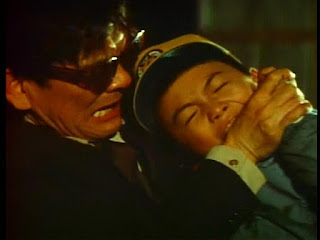
 There aren't many main characters in this film and the ones that are here are very, very basic. Dr. Yano (Akira Yamauchi) is the man who first investigates Hedorah, having an encounter with the creature that proves to be too close for comfort and leaves him with a badly scarred face, and is also the first one who truly realizes the threat that the monster poses to both Japan and the entire world. He finds out everything there is to know about Hedorah, that he's made up of minerals, that the final monster was created by all of these individuals coming together, that Hedorah will continue to grow bigger and stronger as long as there is pollution for him to feed on, and that if he's not stopped, he'll cover the entire in a deadly, sulfuric smog. Despite his injuries and his wife nagging him to get some rest, Yano is determined to continue studying Hedorah in order to find a way to destroy him and, sure enough, he comes up with the plans for the device that, along with some help from Godzilla, does the trick. He's a much more intelligent scientist than this one idiot who suggests that pure oxygen might work against Hedorah, which results in a couple of helicopters being destroyed when they attempt to bomb the Smog Monster with containers full of oxygen. Yano's biggest supporter and most dependable assistant throughout the film is his young son, Ken (Hiroyuki Kawase), who is the first one to recognize the monster being talked about on the news as being a larger version of the unusual one that the old fisherman brought them earlier that day. It's clear very early on that the two of them are quite close, seeing as how Yano brings Ken along when he goes out to investigate the area where Hedorah was last seen and how they're constantly discussing what Hedorah is and where he came from. In those conversations, Yano doesn't talk down to his son at all but, as any father should, assumes that the kid actually has some intelligence and treats and talks to him in the same respectable manner that he would an academic colleague. That turns out to be very fortuitous because Ken is quite intelligent for his age and much smarter than a majority of the other adults around him. He knows a little bit about biology himself and also about physics, able to tell a couple of family friends that Hedorah's tissue is made up of waste material and other minerals. He also knows a little bit about meteorites and atoms and, in fact, not only is he the one who comes up with the name, "Hedorah," but he's also the one who suggests that Hedorah might be vulnerable to dehydration, which turns out to be his one fatal weakness. Ken, like Ichiro in the previous film, is a big fan of Godzilla, with plenty toys of him at his house, and understands the monster's actions and motivations, that he's unhappy with the pollution mankind has created and has come to destroy Hedorah, better than anyone else in the movie. In fact, he seems to have something of a psychic link with Godzilla and often has visions of him not too long before he actually arrives on the scene. Of course, save for his dad, no one ever believes or takes Ken seriously when he says that he knows that Godzilla is nearby, meaning that Hedorah must be somewhere close as well, which proves to have dire consequences for those naysayers. And at the end of the movie when Godzilla is walking off, apparently very disillusioned with mankind and the disaster they've caused with their continuing pollution, Ken has look on his face as he watches him that seems to read that he understands how Godzilla feels, as if he can read his thoughts (although, I don't think you need to be psychic to tell that he's not happy as he heads home).
 In stark contrast to Dr. Yano and Ken, Mrs. Yano (Toshie Kimura) never seems to realize just how dangerous and potentially apocalyptic the situation with Hedorah is. Her husband is trying his damnedest to learn everything that he can about the monster in order to find out if he has some weakness and all his wife can do is badger him to get some rest, at one point telling, "Forget about all of this Hedorah business until after you get well." Even after she sees the result of her husband's experiments with the remains of the Hedorah tadpole firsthand, she still doesn't seem to grasp the gravity of the situation. The part that astounds me the most is when, after Hedorah has destroyed much of Fuji City, killed hundreds of people, and very nearly got her son killed as well, all Mrs. Yano can talk about is how the women she was exercising with outside of the school she works at began choking after Hedorah flew over them, saying, "That's no learning environment!" It's like, "You really don't understand what's happening, do you?" And later on when Hedorah has arrived on Mt. Fuji, all Mrs. Yano can say is that Ken is in danger, once again forgetting that the entire world is in danger as well, and argue with her husband about his desire to go to the spot where the military are going to be setting up his equipment to kill Hedorah, telling him that he's in no condition to travel. First off, at least she's worried about her son this time around but the question I have is why did she allow him to go to that hippie party at Mt. Fuji in the first place, especially with the knowledge that Hedorah could appear again at any moment? Second, I once again have to wonder if she understands the seriousness of situation by arguing with her husband about going to the site. Fortunately, they do go but still, does she not understand what he means when he says that everything rests on those electrodes he's come up with to destroy Hedorah and that he needs to be there to make sure that everything works correctly. And third, despite his injures, Yano still seems to be able to get around and work rather well and it seems like she's the only one making him stay in bed as much as he does. In other words, he probably would be in good enough condition to travel if she would quit stifling him every step of the way. Mrs. Yano is a woman who means well but is ultimately too narrow-minded to understand that there are much more important things going on than what she seems to think is most vital.
 The last two main characters are a teenage hippie couple, Yukio (Toshio Shiba) and Miki (Keiko Mari), who are friendly with the Yano family (I've seen one Japanese version where the subtitles identify Yukio as Yano's brother at one point but I kind of doubt that due to the age difference between the two, although you never know). There isn't much to say about Miki. Her most memorable scene is when she's dancing and singing the movie's theme song, Save the Earth, at this very trippy nightclub while wearing a skintight leotard that has bizarre patterns all over it and while wearing odd face-paint as well. Other than that, though, she acts as nothing more than a tag-along character who just happens to be there when something important happens. She acts as something of a guardian to Ken during the climactic battle between Godzilla and Hedorah on Mt. Fuji but even then, she doesn't do much of anything and isn't worth spending much time on. Her boyfriend Yukio, on the other hand, is a bit more memorable. One reason is because of the clothes that he wears, including a jacket that actually kind of looks like something you'd see in the 50's and, most notably, the very 70's patterned outfit that you see him wearing during that nightclub scene. Speaking of which, he's the center of one of the film's many strange moments when he apparently starts tripping on acid at that club and hallucinates that his girlfriend and everyone else around suddenly has fish faces! But most importantly, he's the one who organizes this large bonfire party on Mt. Fuji, not to make any sort of political statement or create a media event, although he probably wouldn't have minded if the media showed up, but rather to just have one last night of fun before Hedorah completely destroys the world. In other words, he's just said, "Fuck it," and thrown in the towel but plans to go out with a party. But, the consequences of that party kind of defeat its own purpose since the smoke from the bonfires they light appears to attract Hedorah, which results in a bunch of people, including Yukio himself, getting killed before they could really enjoy themselves for one last night. I kind of like Yukio because, the apparent drug problems and alcoholism aside (at that nightclub, he's downing the booze like nobody's business), he seems like kind of a cool guy and someone I'd want to hang out with, especially in the international version when he tells everyone right before the party starts, "Go on, blow your mind!" but, damn, talk about something completely blowing up in your face.
  |
| Don't worry. It's a mannequin. |

 You may find this hard to believe but Godzilla vs. Hedorah, despite how bizarre and out there it gets, is probably the closest to the original Godzilla in terms of its themes, tone, and even with aspects of its narrative structure than any other entry in the original series of films. For one, I think the concept of Hedorah himself is a natural progression from the allegory in the original film. That film was about a monster that was created by a major mistake by mankind, nuclear weapons, but it's hardly the only mistake that we've made in the past century. Another major blunder that we've made that threatens the world is widespread industrial pollution and waste, so it only seems logical that we'd eventually get a monster that was spawned from that as well. (I'm actually surprised that there aren't more movies about monsters created from pollution since that's just as prevalent a threat as nuclear annihilation, perhaps even more so in recent years.) This creates a very interesting tie between Godzilla and Hedorah in that they're both the byproducts of man's modern arrogance and irresponsibility, with the only difference being that one has taken the role typically assumed by the human characters in these types of movies and is trying to save his planet from being destroyed by the other. This dynamic makes their battles feel even more meaningful and epic than they already were, which I really like. Also, just like the ending of the original Godzilla, with Dr. Yamane's warning that continued nuclear testing could possibly result in another one, the ending of Godzilla vs. Hedorah suggests that the threat of another Hedorah being created will always be a possibility as long as there's pollution (and for that matter, the film ends with the revelation that another one possibly has been created, which was meant to be the set up for Yoshimitsu Banno's unfulfilled sequel). I also like the fact that Godzilla, himself a result of a type of pollution, is the one who realizes this, given the shots of waste and garbage in the ocean and the way he seems so disgusted with mankind in general as he solemnly heads home at the end of the movie. And just like the ending of the original movie, there's no reason to think that mankind has learned its lesson and will do what's necessary to make sure that this situation doesn't happen again, especially when you see those shots of continuing pollution as Godzilla heads for home. Most unfortunate of all, the endings to both of these movies are not exactly wrong and we just can't seem to learn our lesson in real life, can we?
Like I said, some of the narrative structure of Godzilla vs. Hedorah is surprisingly similar to that of the original Godzilla. Just like how Godzilla's presence in that film was gradually realized by his destroying boats and creating a shortage of fish for the natives of Odo Island to catch, Hedorah begins his reign of terror by destroying some oil tankers and the first sign of his existence is when an elderly fisherman catches a fairly large version of one of the tadpoles that come together to make up his body in a bay where the healthy fish have been replaced by freakish mutants. Even though there's no love triangle here, I guess you could say that the characters of Miki and Yukio are kind of Emiko and Ogata, albeit nowhere near as important to the plot. Dr. Yano is quite similar to Dr. Serizawa in that they're both sympathetic and heroic scientist characters who are ultimately the ones who hold the key to destroying the monster and saving the world. Yano doesn't sacrifice himself in the same manner that Serizawa did but, still there is a correlation between them. In fact, after his nasty encounter with one of the smaller Hedorahs, the right side of Yano's face is bandaged up for the rest of the film due to the hideous sulfuric acid scars, making him look a little bit like the eye-patched Serizawa. And the part where Hedorah flies directly over Yano's home and the pollutants he leaves in his wake poison the water of Yano's fish tank and kill the fish is very similar to the scene where Serizawa gives Emiko a demonstration of the Oxygen Destroyer, right down to Mrs. Yano recoiling in horror at the sight of it.


 And finally, like the original film, Godzilla vs. Hedorah is a pretty grim and dark movie that doesn't pull any punches when it comes to showing the consequences of the monsters' actions. In stark contrast to the more or less family friendly tone that the series had been taking since King Kong vs. Godzilla, Hedorah shows people scarred or dying in pretty horrific ways, which is why I always advise parents who are trying to introduce their kids to Godzilla to wait until their kids are about ten or eleven or so before showing this one to them because, as happened to me when I saw it as a little kid, it could very easily freak them out (and yet, this movie got a G-rating when it was originally released in America; it's been bumped up to a PG since then but, man, the MPAA doesn't know crap). First, we get a nasty look at Dr. Yano's scarred face after his scuba encounter with Hedorah. Then, during Godzilla and Hedorah's first battle, Godzilla starts flinging Hedorah around, inadvertently causing pieces of his sludge to fly off and leading to a big blob of it crashing through a window and hitting these guys who are playing mahjong. After the fact, when the still-living blob of sludge has crawled away, you see a rather eerie wide-shot of the people lying dead amidst the slime-covered room. That's nothing, however, compared to the horror and destruction that Hedorah causes when he goes on a rampage in Fuji City in the middle of the film. The part that absolutely got me when I was a kid is when, after having a brief scuffle with Godzilla, Hedorah flies over this group of people who are running away and you see the effects of the sulfuric acid he expulses up close and personal, with a shot of a man's face slowly being burned and dissolved and with Ken coming across some skeletons covered in sludge immediately afterward! As he's flying away, Hedorah heads straight for a building that's under construction, forcing a worker there to jump off. However, as he jumps off, Hedorah passes over him and you then see a shot of a pile of bones with the man's hardhat sitting next to it on the ground. And let's not forget how, during climax on Mt. Fuji, directly kills more people by going over them and leaving them their dead. He did so at one point when he wasn't even in his flying form, so who knows what he did to them in that instance, and he also deliberately targets Yukio when he and the other teenagers are throwing torches at him and hits him with a glob of his acidic sludge, killing him instantly. In addition to all of this, you hear news reports about how many people have been killed off-screen and how dead bodies are piling up in the streets and, given all of the destruction and carnage that you do see, coupled with the film's grim, dark tone, it's not at all hard to believe them. It's small wonder that Banno added the infamous scene where Godzilla flies to offset all of this dark material.

 Speaking of that scene, it's just the cap on an entire movie of pure strangeness. If you thought Godzilla's Revenge was weird, you don't know the half of it because Godzilla vs. Hedorah is known for not only being the most bizarre entry in the series by far but it's also one of the strangest movies period. Yoshimitsu Banno filled the movie with so many bizarre images, sequences, and directing and editing choices that it makes you wonder if some of the acid that Yukio was apparently on spilled over behind the camera as well. Banno to this day swears that he wasn't on drugs at all when he made this movie but, still, given the content of this movie and the time period it was made in, it's a little bit hard to believe that at least someone involved with this movie wasn't completely out of their head for one reason or another. You know from the start that you're in for an unconventional Godzilla movie when you have a James Bond-esque title sequence with a woman, in both the Japanese and American versions, singing about saving the Earth in front of a bizarre, liquid-like backdrop and constant shots of oil spills filled with dead fish floating in the ocean along with shots of junk like a mannequin and an old clock floating in some polluted water. The movie only gets stranger from there. At several points, you have random animated sequences that have no context whatsoever and are used to bridge scenes. The first one, which you see a little bit after Dr. Yano and Ken's first encounters with Hedorah, depicts the Smog Monster standing in the ocean while holding a ship in his left hand and a killer whale that's dripping blood in his right as he proceeds to drink sludge from the ship while a factory in the background begins expelling thick fumes of smoke, destroying some random kanji symbols that spell out, "Cheerful," in the process. The second bit of animation occurs after the first confrontation between Godzilla and Hedorah and depicts a factory with mechanical arms that it uses to grab any plants that pop up out of ground, growing bigger in the process until Hedorah flies in, swallows the factory, and then, with a big smile on his face, flies away. The third and final one happens after Hedorah's horrific rampage through Fuji City. It starts with a still painting of Hedorah flying while carrying a sign that says, "Anti-Hedorah Oxygen Masks Now on Sale," and the camera pans down to show two animated women walking wearing said oxygen masks. When they pass each other, there's a sudden explosion, they lose their masks, their faces then become discolored and become floating shapes in front of a blank background that cross each other. This leads into the next actual scene because the two faces become outlines on a map behind a newscaster, meant to show what sections of Fuji City were damaged in Hedorah's attack.


 As I mentioned earlier, a scene that takes place in a nightclub is one of the film's most psychedelic parts by far and will have you wondering if you yourself are on acid. You have this nightclub which is dimly lit and has a bizarre screen on the back wall that's showing color-changing splotches flickering and bulging while a bunch of teenagers dance in a very 70's style to some funky music that's accompanied by Miki swaying in the skintight leotard of hers while singing that Save the Earth song. The whole time this is going, Hedorah comes ashore outside and, after crawling around a bit, he jumps at the camera and we get a sudden transition to some floating and dancing animated skeletons and skulls which we quickly see is being projected on that bizarre backdrop. The hell kind of nightclub is this? And like I've said before, later on Yukio seems to start tripping on acid and imagines that Miki and everyone else around him suddenly has fish faces. For a while, I thought those were just masks that everyone was wearing for some reason but I now realize that Yukio is supposed to actually be hallucinating that everyone's face has become a fish. The party is eventually crashed when that crawling blob of Hedorah's sludge comes down the stairs into the club and while it quickly heads back out, it leaves behind a poor little white cat that's covered in goop and is sitting there meowing. See what I mean? This movie is so random. Ken's sudden visions about Godzilla being nearby are pretty unusual as well. The first one begins by making you think that Godzilla is going around and destroying waves of sludge in the ocean with his atomic blast but then it suddenly cuts into a split-screen and it seems as if Ken is just dreaming this... or is he, seeing as how he appears to have an unexplained psychic link with Godzilla? The fact that Godzilla appears soon afterward to confront Hedorah for the first time makes it lean even more towards the latter. The second time this happens is even stranger because it happens while Ken is on a rollercoaster with Yukio and Miki. As they reach the top of a drop, everything seems to freeze and the camera very quickly zooms over to the right where you see a black silhouette of Godzilla in the distance. It goes by so quickly that you might not even realize what you saw at first and when you rewind it out of curiosity, you'll probably be even more confused. And at the party on Mt. Fuji, in the middle of his having fun dancing with everyone, Ken suddenly stops and everything around him goes silent as we cut down to a shot of Godzilla firing his atomic blast that's completely soundless save for some odd music being played at the moment. You also have other weird stuff, like random shots of stars and galaxies when Dr. Yano and Ken are talking about where Hedorah might have come from as well as animation depicting how atoms work that's right out of an educational film; a skeleton of a building falling apart in complete silence after Hedorah passes through it and corrodes the metal with his sulfuric acid; a bizarre sequence involving several dozen TV screens with images of a lot of people demanding something be done against Hedorah, as well as shots from Godzilla and Hedorah's first battle and of a baby sinking in sludge(??), with the sound reaching a frantic cacophony and the images turning into a bunch of flickering colors; a moment where the color suddenly drains from the film and after being black and white for a couple of minutes, it suddenly comes back when Yukio strums his guitar; and some unexplained, ghostly-looking old people watching the hippy party as well as the big fight between Godzilla and Hedorah. I'll talk about Godzilla's inexplicable ability to fly in the next section when I talk about the Big G himself but, make no mistake, it's hardly the only weird thing in this movie and I can understand why many would be put off by this bizarreness but, for me personally, I really enjoy. None of it makes any sense or has any context but it makes the movie an interesting and unique experience to say the least, which I like.
 Many have noted before that this is the movie where Godzilla becomes an out and out superhero who protects Japan and mankind from serious threats like Hedorah. I can certainly see why people, at first glance, would think that since is the first time where Godzilla seems to go out of his way to help Japan from this monster that's terrorizing it, whereas before he either had to be talked into helping humanity by the more benevolent Mothra, was being controlled by humans to do so in Destroy All Monsters, or, as in Godzilla vs. The Sea Monster, was just doing his own thing which inadvertently helped the lead humans to defeat the bad guys and escape. However, I think people miss a subtle but important point about Godzilla's actions in this film: he's defending the Earth, not mankind. Hedorah threatens the survival of the entire planet and since Earth is Godzilla's home too, he's naturally going to do whatever it takes to protect it. The fact that he ends up saving humanity by killing Hedorah at the end of the movie is just an unintentional result of his actual mission. And speaking of which, while he doesn't threaten them himself, it's clear that Godzilla isn't too fond of humans by the end of the movie. As Ken speculated early on in the film, Godzilla is pretty angry when he sees all of the pollution that's floating around in the ocean and spends some time destroying it with his atomic blast before he even confronts Hedorah for the first time. It's possible that Godzilla didn't even know that Hedorah existed until he suddenly got jumped by the Smog Monster when he came ashore after destroying some more pollution. However, he quickly realizes that Hedorah feeds on pollution, possibly due to the argument that he seems to have with the Smog Monster during their first confrontation, and at one point appears to blow up an oil refinery, knowing that the smoke created would get Hedorah's attention and draw him out of hiding. At first, I figured that maybe Hedorah himself caused that explosion but since he seems to be in another part of the city at the time and then heads towards it after it happens, it leads me to believe that Godzilla did it in order to draw Hedorah to him. And that explosion definitely had to have killed a bunch of people, which is another sign of where Godzilla's priorities are. By the end of the movie, it turns out that Godzilla ultimately had to use something created by humans in order to defeat Hedorah but that doesn't change the fact that, after he's finally killed his opponent and made sure that he can't come back, Godzilla glares at the humans who are watching nearby, as if he's saying, "It's your fault this happened," before walking off in apparent disgust. The fact that he doesn't give a victory roar like he usually does after defeating an enemy is a sign to me that he's become very disillusioned with mankind by this point, even more so than he was before, and as he heads home, the shots of pollution that it keeps cutting to, in my opinion, mean that Godzilla knows that while Hedorah may gone, the situation that created him hasn't been resolved and it's possible that another one may arise as a result, which the film's ending strongly hints at. He's so disenchanted that when Ken tries to get his attention by calling and waving to him, all Godzilla does is grunt and turn away to continue walking home, not making another sound as he does so. He's not in the mood and Ken's facial expression as he watches seems to say that he understands.
 Some other things that I really like about Godzilla in this film are his determination and his intelligence. He takes a lot of abuse from Hedorah during their fights and even gets seriously injured and even humiliated during their big finale battle, getting various parts of his body, including his left eye, burnt by his sulfuric acid and being basically crapped on by Hedorah after being dropped into a pit, and near the end of the fight, you can see him staggering, a sign that this fight has taken a lot out of him, but he still keeps going and doesn't stop until Hedorah is definitively dead. Even during their first encounter when Hedorah isn't strong enough to be much of a challenge for him, Godzilla knows the kind of threat that he could, and does, become and tries to stop it right then and there, chasing him around the port and even following him back into the ocean and proceeding to atomic blast different spots in the water to try to find him. And like I said, Godzilla shows that he is very intelligent in this film, engaging in an argument with Hedorah (which is something we have seen him do before) and trying to get him to go away, constantly shaking his arm at him in a gesture meant to be intimidating. When that doesn't work, he comes up with some really smart ways to fight Hedorah, like the aforementioned moment when he blows up an oil refinery in order to attract him there so he can ambush him, a moment during their climactic battle when Godzilla distracts Hedorah by swiping a rock with his tail and then punches right in his eye as a means of payback for burning his own eye, and, most importantly, his figuring out that the enormous electrodes the military has set up are what can kill Hedorah and that he can use his atomic blast to energize them when the power fails. Speaking of the latter, I like this part when, after the military has fixed the damaged line necessary to run the electrodes, Godzilla is holding Hedorah in place so they can use them but just when they start to, the generator blows a fuse. This prompts Godzilla to shake his head in irritation, probably thinking, "Do I have to do everything myself?" before he once again uses his atomic blast to energize the equipment.
  And, of course, we can't talk about Godzilla in this movie without mentioning the truly bizarre moment when he reveals a power that we never knew he had before, which is to use his atomic blast as a type of jet propulsion and take off like a rocket. Weirdly enough, I did not remember this scene from when I was a kid. I don't know if I was so weirded out by everything else that happened in this movie that I just didn't pay attention or if my very young mind was just distracted whenever that happened (it shouldn't have been, since it was Godzilla) but, whatever the reason, years later when I was reading in the Godzilla Compendium and other sources that Godzilla flies in this film, I was dumbstruck, thinking, "I don't remember that!" I remembered the part after that, when Godzilla knocks the escaping Hedorah down and then slams him several times, but I didn't remember the flying part for some reason. Who knows why? But, in any case, when I saw the film for the first time in years and it came to that part, needless to say, I thought to myself, "How did I not remember this?" It's such an out there and unexpected moment that it should have been hard for even someone as young as I was at the time to forget. In any case, I don't really know what else I can say about this moment. Just the sight of Godzilla lifting off of the ground and then flying backwards like that is enough explanation for how out there it is. It actually makes me wonder why he never used this ability before or since. That would come in handy, especially when battling monsters that are much quicker than him and can fly.


 As a kid, Hedorah himself was one of the reasons why I didn't particularly like this film because he absolutely terrified me. I had many nightmares about him throughout my childhood, even when I hadn't seen the movie in years, and to this day, I still occasionally have dreams about him. I'm hoping that, after looking at him in all his various forms, no one would blame me. In my opinion, he's the creepiest monster Toho ever created. Everything about him, from the way he looks, with his disgusting, slimy body and very evil-looking red eyes, to his movements and sounds, are so alien and bizarre and make him a truly terrifying monster. I've always been freaked out by things that start off as small and grow larger and larger over a short amount of time to the point where they're absolutely huge (which is one of the reasons that I found the Blob to be so scary when I was a kid) and Hedorah is certainly a prime example of that. I think he's actually the first monster since Mothra to have a detailed life cycle that we see progress as the movie goes on. He starts out as a bunch of tadpole-like creatures that begin feeding on the polluted waters near industrial areas of Japan, growing bigger and stronger in the process. Two by two, they come together to form much larger creatures, with one of them growing big enough to destroy a couple of oil tankers at the beginning of the film. Eventually, all of the Hedorahs form into one enormous monster that, like a frog, evolves to the point where it can leave the ocean and crawl onto land in search of more pollutants to feed itself. You see the effect that Hedorah's feeding has on his body when he goes to a smokestack and begins breathing in the smoke, his body slowly expanding and growing in the process. After his first fight with Godzilla, Hedorah continues to grow bigger and more powerful as he feeds on more pollution, eventually evolving to the point where he can change into a saucer-shaped, flying form that spreads sulfuric acid strong enough to corrode metal and even knock Godzilla down for the count when he gets blasted with it right in the face. We also get a look at Hedorah's evolving normal form during his attack on Fuji City, which right now just looks like a much, much larger version of the four-legged shape he had during his first battle with Godzilla. However, Hedorah reveals his ultimate form, an enormous, upright humanoid shape, when he heads for Mt. Fuji and engages in battle with Godzilla. Being even taller than Godzilla by this point, and still able to change into his flying form whenever he needs to, Hedorah proves to one of the Big G's toughest foes, shrugging off any attack thrown at him, even when it involves his right eye being severely damaged, and very nearly kills Godzilla. Even when it looks like he's down for the count after being dehydrated by the electrodes, Hedorah sheds his dried up, outer skin and attempts to escape by basically becoming a flying version of his original tadpole form, which reverts back to his four-legged, terrestrial stage when Godzilla knocks him down to the ground.
 The sounds that Hedorah makes are quite fitting for a creature as bizarre and freaky as he is. I don't even know how to describe some of these noises. The noises he makes for the first half of the film honestly sound like a bunch of growling farts and raspberry sounds (that's the only way I can think to describe them). When he evolves into his ultimate form during the latter half of the movie, he mainly communicates in some eerie, high-pitched, warbling shrieks and chirps that really sound unearthly and chilling. At a couple of points when he manages to injure and humiliate Godzilla, Hedorah actually lets out a chirping-type of laugh to mock him! He also makes a lot of bizarre popping and moaning noises, like the sort of growl he makes when he first sees Godzilla while he's feeding off of the smokestack, as well as a distinctive whirring noise you hear when he's flying that also emits from his body at various other points. In fact, there's hardly a moment when there isn't some sort of bizarre sound coming from Hedorah's body, making him feel all the more creepy and alien. And, I swear that there are some moments where you can hear Hedorah purr! Yes, you hear this unmistakable noise when he's feeding from the smokestack as well as at several points during his final fight with Godzilla when this red, glowing formation rises up slightly from the top of his head (don't ask me what that thing is because I don't have a clue). Apparently during those moments, Hedorah is very content and is not afraid to let anything nearby know. As you can tell, Hedorah is a very memorable monster both in terms of design and sound, and when you hear some of those noises tonight, you'll know that the Smog Monster is paying you a visit in your dreams just as he's often done with me over the years.
 |
| Hedorah's flesh under a microscope. |
 |
| Note how small he is in comparison to the entire suit. |


 With Eiji Tsuburaya gone, his assistant, Teruyoshi Nakano, was now head of Toho's special effects department but, due to this film's low budget, he wasn't yet able to really show off what he excelled at, which was blowing stuff. Some of the following Godzilla films would turn out to be very impressive in terms of the enormous, bright explosions that would fill the monster and city destruction scenes, but Godzilla vs. Hedorah is rather sparse when it comes to urban destruction, save for what you see in the sequence where Hedorah attacks Fuji City, most notably in the destruction of the oil refinery. But, despite their limited resources and the short shooting schedule they had to work with, Nakano and director Yoshimitsu Banno were very much on the same page in regards to the vision for the film and just went for it, resulting in the film's famously unusual effects and visuals. There's some really good stuff in this movie, including the well-designed and executed various forms of Hedorah (the Godzilla suit is starting to look a little ratty by this point but we'll talk more about that in the next movie), good models and miniature sets that Godzilla and Hedorah battle amongst, even if said battles don't result in much property damage, nice matting and optical shots, some truly horrific effects such as the shot of a man's face being dissolved by Hedorah's sulfuric acid and the gross, slimy stuff that happens whenever Godzilla fights him, nice uses of animation and sound effects whenever we see Hedorah change back and forth between his terrestrial and flying forms, and the really weird stuff like the aforementioned animation sequences and whenever Ken has a vision about Godzilla, amongst others. Given the budget and time constraints they had working against them, it's amazing that the special effects team were able to make the visuals in this film not only fairly impressive but really unusual as well and so, I applaud them. It goes to show what you can do with a little bit of imagination, resourcefulness, and talent.


 We actually get our first look at Hedorah in less than a couple of minutes into the film, with his head emerging from some polluted waters after we get some shots of factories (footage from Godzilla's Revenge) and the title appearing over a still of that shot, and we don't have to wait long to get our first sequence involving him either. After Dr. Yano is brought that strange tadpole and later sees a news report about a similar, much larger creature attacking a couple of oil tankers, he and Ken head out to the seashore to investigate the area where the creature was last seen. As Ken stays onshore, Yano goes scuba-diving and we get a slow and rather creepy underwater sequence where we see the effects of pollution on this bay, as well as possibly Hedorah's presence, in the form of dead sea animals (including a bird) on the ocean floor along with some junk like beer bottles, old, thrown out television sets, and the like. Back onshore, Ken is attempting to open up some muscle shells with his knife, only to find that they're completely empty. After noticing some dead crabs floating in the shallows, Ken is suddenly hit by a wave and turns to see a smaller version of the Hedorah that attacked the oil tankers heading right for him. Ken tries to run away but he trips and falls right before the creature jumps out of the water at him. It goes right over him and Ken uses his knife to attempt to cut it, but it does absolutely nothing to harm the Hedorah and looks more like he's slicing through mud than anything else. After the creature splashes into the water behind him, Ken sees it heading back out to sea and, realizing that it's heading where his dad is scuba-diving, futilely tries to warn him by yelling. However, it's too late because Yano immediately has his own encounter with the Hedorah. He sees pass over him several times and then, realizing that it's coming down to his level, he gets behind a rock in order to hide while getting a closer look. He sees the creature come around a bend just a few feet in front of him but Yano's scientific curiosity gets the best because since he stays exactly where he is and doesn't move, the Hedorah quickly sees him and heads right towards him with a menacing look on its face. Back onshore, Ken realizes by looking at his watch that it's past the time when his dad said he'd be back and, after noticing an acidic burn on his right hand, yells for his dad. Of course, you eventually learn that Yano wasn't killed but did sustain a nasty burn to the right side of his face.
 With the Hedorahs continuing to attack oil tankers, it isn't long before Godzilla comes into the picture, walking in front of a large setting sun and roaring. Meanwhile, we see the effect that the continued pollution of the ocean is having, with long lines of floating waste completely engulfing and killing healthy underwater environments and the fish that live there. As Ken narrates a paper he wrote for school on the subject, we see Godzilla rise from the ocean up ahead of this waste, with Ken telling us that the Big G would be enraged if he saw this and would do something about it. And sure enough, Godzilla does do something about it by utterly destroying the slicks with his atomic blast, leading us to see that Ken is apparently dreaming this but, given how his predictions about Godzilla come true throughout the film, it's very possible that this is actually happening. After having that vision, Ken wakes up to tell his father, who's experimenting with pieces of the Hedorah tadpole given to him by the old fisherman, and his mother about his dream, telling them that he knows that Godzilla is coming in order to kill Hedorah. After Ken's mother patronizes him and tells him that Godzilla will surely come if he saw it in his dream, Dr. Yano takes two small pieces from the tadpole and drops them into test tubes. Each piece becomes a separate, tiny tadpole and Yano then pours them both into a petri dish of muddy water. Once in the same dish, the two tiny creatures swim towards each other to become one, with that effect being as simple and yet surprisingly effective as can be. Yano experiments further by putting another newly formed tadpole into the petri dish and the same thing happens. Now realizing how the monsters grew so fast, a feeling of dread washes over Yano as the reality of how serious the situation is becoming hits him.


 At this point, all of the pieces of Hedorah have come together to form one enormous monster which, later that night, heads for the port of Fuji City. Nearby is that psychedelic nightclub where Yukio is hitting the booze while Miki dances around in her leotard while singing Save the Earth. While this goes on, Hedorah comes ashore, splattering a streetlamp with some sludge as he jumps out of the water. After crawling and bounding around this industrial complex, he climbs up towards a couple of smokestacks in order to feed off the thick fumes. Someone apparently sees him and calls the police but his warning is ignored by the officer who answers the phone because Hedorah is a sea monster. (Well, even so, shouldn't he still check it out just to be safe? Moron.) With no one to disturb him, Hedorah begins to very heavily breathe in the thick smoke, with his body slowly stretching and expanding as a result, while he purrs and slowly closes his big eyes in complete satisfaction (again, it looks as if he's getting stoned!) But, his bliss is broken when he hears Godzilla roars nearby. He turns to see where the sound came from and, due to the smoke surrounding him, all he sees is Godzilla's atomic blast set fire to a little bit of pollution. However, Hedorah sees enough to know that this is something he doesn't like and growls while he continues watching. Godzilla slowly comes towards Hedorah, walking in the middle of the port, and once he gets within range, the Smog Monster attacks by jumping at him. He lands right on top of Godzilla's head, who struggles to get him off and eventually falls to the ground as a result. Hedorah continues crawling all over Godzilla as he tries to get him off, punching his hands right through his body at one point. Hedorah then tries to jump off Godzilla in order to escape but Godzilla grabs his tail, causing him to fall back to the ground. Godzilla then walks over, grabs Hedorah's right back leg, and begins swinging him around, increasing his speed as he does. What Godzilla doesn't realize is that pieces of Hedorah's sludge begin flying off as a result, including a big glob of it that crashes through a window and kills these guys playing mahjong. The sentient sludge then crawls away, leaving the players dead amidst all of this sludge. It also crawls down the stairs of that nightclub, creating a panic as everyone gets up against the wall in order to escape it. The sludge departs just as quickly as it arrived, although it leaves a mess behind, including a poor slime-covered cat.
  After that fiasco at the club, Yukio and Miki run to their car out back but before they can drive away, they notice Godzilla following Hedorah around the port and decide to take a closer look. They drive closer to the monsters, who are now having an argument, roaring and growling at each other while gesturing with their limbs. Something that Hedorah says apparently makes Godzilla really mad because he out and out roars at him before the two of them continue growling and gesturing towards each other. After a bit more arguing, Hedorah suddenly fires a glob of his acidic sludge at Godzilla, hitting him in the right shoulder. With his shoulder now burning and smoking, Godzilla angrily roars at Hedorah and heads toward him. Hedorah proceeds to jump at him but Godzilla gets out of the way and smacks him from behind, causing him to fall flat on the ground. Liquid then begins pouring of Hedorah's body and he starts to lose his mass as well. Godzilla then gives Hedorah a taste of his atomic blast but while this does create some explosions and sparks, it doesn't seem to hurt the Smog Monster, who gets back up and turns around to face Godzilla, who has a perplexed look on his face. Godzilla tries his atomic blast again but this, once again, seems to have no damaging effect on Hedorah. He then growls and gestures threateningly towards Hedorah again, who seems to sheepishly back away from his opponent. Growing frustrated, Godzilla walks up to Hedorah and stomps his foot in agitation. When he gets no response from that, he gets ever closer to Hedorah and lightly kicks him with his foot. Hedorah then takes the opportunity to escape by quickly jumping into the air and splashing into the ocean. Not wanting him to get away, Godzilla jumps into the water as well and heads out to sea, blasting the water here and there to try to find Hedorah.


 After we hear news reports of Godzilla and Hedorah fighting each other across the countryside, as well as scenes where Dr. Yano figures out and explains Hedorah's biology and capabilities, we get the Smog Monster's horrific attack on Fuji City. It starts innocently enough, with Ken riding a rollercoaster with Yukio and Miki, when he suddenly has a vision of Godzilla. Realizing that Godzilla's presence must mean that Hedorah is nearby as well, Ken runs to call his dad once the rollercoaster stops. Yano instructs Ken to go to the school where Ken's mother works and to come home with her but, as he's doing so, he suddenly loses contact with his son over the phone. When we cut back to the phone booth, it looks as if Ken's gone and we can also see that the glass windows of the booth are shattered. We quickly find out that the glass shattered due to a nearby explosion and that Ken ducked down inside the booth to take cover. He then tries to get back in touch with his dad but now the telephone line is dead and Ken then decides to run towards his mother's school. At said location, Mrs. Yano is outside, exercising with a large group of her students. In the middle of their exercises, Hedorah flies past them and everyone begins to collapse and suffocate from the sulfuric acid he's left behind. Nearby plants begin to wither and die as a result as well and with some warning sirens going off nearby, Mrs. Yano and her students run for cover inside the school. A series of violent explosions rock the nearby Japan Oil Company, which Yano sees on the news, as Yukio and Miki meanwhile attempt to drive home but get stuck in the traffic-congested streets. When they're able to drive on, Miki puts the car in gear but, when she hits the gas, it stays right where it is. Wondering what's going on, the two of them then see sludge dripping down the windshield. Panicking, they manage to get out of the car right before it's sucked up, along with many others, by Hedorah, who's sitting in the middle of the road while doing so. As Ken continues running for his mother's school, Hedorah heads for the burning oil refinery, where Godzilla is waiting for him (that's why I think he caused the explosion in order to attract Hedorah there). After Hedorah flies past him, Godzilla grabs ahold of him when he comes back for another pass and slams him onto the ground. Godzilla then punches into Hedorah's body but, like before, it doesn't seem to hurt him. Godzilla stands there perplexed after pulling his hand out and Hedorah proceeds to lift off of the ground and, because Godzilla is close to him, his sulfuric acid mist begins to burn his neck. Hedorah flies off, leaving Godzilla to collapse onto the ground from the pain as the refinery explodes around him. As he escapes, Hedorah flies right over a group of running people and we see the horrific effects of his acidic mist as a man's face is slowly scarred and disintegrated by it. Ken, who is still trying to find his mom, comes across the aftermath, with all of these people now having been reduced to sludge-covered skeletons. As Hedorah heads out of the city, he flies towards a building that's under construction, killing a worker and causing the building to fall in on itself after his acid corrodes the metal.

 The climax of the film begins shortly afterward with Ken giving Dr. Yano the idea that drying out Hedorah's sludge may be the way to destroy him and with Yukio deciding to throw one last big party on Mt. Fuji before Hedorah gets to it. After we see that Yano's experiment with some electrodes manages to kill the Hedorah tadpole that he's had since his first experiment where he showed how they combined to become one monster, and he, off-camera, contacts the military with plans for a bigger model, we see the party at Mt. Fuji get underway, while some ghostly-looking elderly people watch from afar. However, the smoke from the bonfire and torches that they light, as well as possibly the exhaust from the cars they used to drive up there, doesn't go unnoticed by Hedorah, who has now grown to an enormous size. Heading straight for Mt. Fuji, and shrugging off some off-screen attacks by Self-Defense Forces, Hedorah passes straight over the Yano household, dumping sludge onto Ken's Godzilla toys outside, causing the flowers in the garden to wilt, and their pet fish to slowly suffocate as the water in the tank turns black. As Yano asks Miki to call the military for him, we cut back to the party, where Ken has another vision of Godzilla and again realizes that Hedorah is there as well. After he warns Miki of this, the party stops once Godzilla's roar is heard and everyone then sees Hedorah flying in, dodging an atomic blast from Godzilla in the process. Everyone then takes cover, with Ken cheering as Godzilla arrives on the side, with Hedorah, now in his ultimate, humanoid form, walking in out of the darkness from the other direction (a very creepy way to reveal his final shape, I might add). The two monsters approach each other like boxers coming out of their corners and begin roaring challenges at each other. After a quick cutaway where Yano talks to the Self-Defense forces and asks them to please hurry in constructing the electrodes and then decides to go to the Mt. Fuji area himself, much to his wife's consternation, we get back to the standoff between Godzilla and Hedorah. After they stare each other down a little more, Hedorah fires a blob of sludge at Godzilla, which he manages to dodge. However, Hedorah quickly fires a couple of more, which do manage to hit their target, following those up with a third one that hits Godzilla in his left eye. As his face steams and burns, Godzilla growls angrily at Hedorah, who hunkers down and changes into his flying mode. He flies past Godzilla while firing a laser at him, causing him to fall to the ground.

 With Godzilla temporarily out of action, Hedorah flies to another part of the field, flying over and apparently killing a bunch of people trying to run away in the process. After landing and reverting back to his normal form, he sets on those still at the sight where the party was taking place earlier. As Hedorah approaches, Yukio tells everyone to grab some torches and use them against him (in the English versions, he says that Hedorah is afraid of fire, even though there has been no indication of that beforehand). Everyone immediately does what he says and begins running towards Hedorah and flinging the torches at him, and I might add that these people apparently have very strong arms because those torches manage to get as high up as Hedorah's head. But, despite their efforts, not only does Hedorah show no fear whatsoever towards the torches but they, predictably, do nothing to him. As they continue Hedorah, takes a couple of more steps closer to them and hits Yukio with a glob of sludge, causing him to fall to the ground before dying from the poisonous gunk. Hedorah then makes short work of the others by apparently just going over them and leaving them lying on the ground dead with sludge on them. Now Miki, Ken, and just a few others are left as Hedorah slowly approaches them in a menacing manner. Ken goes for a torch but Hedorah knocks it over and extinguishes it with some sludge before the kid can pull it out. Just when Hedorah is almost on top of them, an atomic blast goes right by him, getting his attention. Turning around, Hedorah jumps up into the air and rains sludge down onto Godzilla before landing in front of him. The two of them square off a little bit again, with Hedorah now clearly not afraid of Godzilla as he roars and growls at him, going so far as to threaten him with his warbling chirps and limb gestures. Godzilla then decides to get some payback for an earlier insult and knocks a rock with his tail, distracting Hedorah and enabling Godzilla to go in and punch right next to his left eye. With some of his poisonous sludge leaking over his own eye, Hedorah has no choice but to close it shut. The two of them then engage in physical combat, with Godzilla grappling with and punching Hedorah, while all Hedorah does is walk away from and try to keep Godzilla from grabbing. With his foe on the defensive, Godzilla grapples with him a little more and even manages to shove him down onto his side. Hedorah manages to get to his feet and, growling at Godzilla, fires the laser from his right eye and hits the ground right in front of Godzilla, creating a large fire. Overwhelmed by the heat and the thick smoke (I don't really know why this bothers him, though), Godzilla staggers away, coughing repeatedly, until he falls down.
 Laughing at seeing Godzilla in such a helpless state, Hedorah walks over to him and lays down on top of him, grabbing ahold of him while doing so, and changes into his flying form. He then takes off and carries Godzilla off to the side of the mountain, eventually dropping him and letting him tumble down the slope until he falls down into a large pit. Hedorah lands on the edge of the pit and, after reverting back to his normal form, proceeds to try to kill Godzilla in the most disgusting and humiliating way possible. He sends a wave of sludge (that comes out from between his legs) down into the pit, completely covering Godzilla, who is no condition to try to escape. After doing so to the point where Godzilla is almost drowning in the stuff, and while making a noise that sounds like someone who's relieving himself, Hedorah ends the pouring and laughs at Godzilla, clearly proud of himself. Godzilla futilely fires his atomic blast into the air a couple of times but it does no good. Hedorah, meanwhile, while waiting for Godzilla to either suffocate or die from the toxicity of the sludge, is distracted when a military helicopter, taking the advice of that scientist who suggested that pure oxygen might harm the Smog Monster, comes flying towards him and drops a container of the stuff at his feet. Feeling no pain from the act, Hedorah looks back up at the retreating helicopter and destroys it with his laser. But just when he's gotten rid of that pest, Hedorah turns upon hearing another helicopter approaching. He doesn't even let this one drop is oxygen and fires his laser. This helicopter, though, manages to dodge the laser and quickly retreats, leaving Hedorah to continue watching Godzilla struggle in the sludge-filled pit.
  |
| Not one of Godzilla's best ideas. |


 Hedorah flies to the site where the electrodes are set up and lands near them before transforming back into his normal form. As the monster looks around curiously, Dr. Yano tells the commander that they must begin blinking the headlights of the nearby jeeps in order to get Hedorah's attention and keep him from leaving. The commander orders them to do so and the blinking headlights do indeed get Hedorah's attention. He growls and drones curiously at them and, after staring for a little bit, he begins approaching them slowly. At the same time, the commander is asking about the progress of the repairs and we later find out that it'll be another ten minutes before they're complete. However, we can see that at the rate he's walking, Hedorah will be in-between the electrodes in only a couple. He continues approaching the vehicles but then, just when he's within the edge of their range, he suddenly stops. As he turns around, we then see why. Another stupid helicopter swoops in and attempts to harm him with a tank of pure oxygen. You can probably guess what happens next. After it drops the oxygen, Hedorah focuses his laser on the helicopter and sends it crashing down to the ground. With that out of the way, Hedorah stares at the blinking headlights for a little while and then, begins approaching the vehicles again. With Hedorah just about within range, the commander says that they only have one minute left to complete the repairs, even though it's obvious that they won't be done in time. Everyone watches tensely as Hedorah gets to the point where he's almost on top of the vehicles, with the commander frantically telling his men that they need the power now. Just when all hope seems lost, an atomic blast hits the side of the electrode, energizing it. Hedorah is then bombarded by the energy, growling in confusion and apparent pain as his body begins to dry out and his tail even snaps. Godzilla then hits the electrode with another blast, subjecting Hedorah to even more dehydrating sparks and bolts. He falls to the ground as the electrodes continue doing their job and we get a close-up of his eye blinking frantically until it slowly closes shut as the electrical discharge ends.


 Godzilla staggers up to Hedorah's dried up husk, still reeling from the punishment that he's taken in his battle with the Smog Monster. Cautiously approaching the husk, Godzilla can sense that there's still a threat lying within it and punches into it. He takes out two white orbs that, as a kid, I thought were Hedorah's eyes but since his eyes are red, I'm not exactly sure what they are. They could be eggs, as some have speculated. Whatever they are, Godzilla holds them up, hits the electrode with his atomic blast again, and burns them into dust, as well as further dehydrating the dried up shell that used to be Hedorah's body. Godzilla then seems satisfied that the crisis is over and is about to leave but then, just to be safe, he whips a rock onto the husk with his tail... and it's a good thing he did that because Hedorah, now reduced to his earlier, four-legged form, sheds that shell like an insect would and flies away. Godzilla, however, is like, "Oh, no you don't" and then demonstrates his ability to fly himself by using his atomic blast as a type of jet propulsion. As unexpected and ridiculous as this ability is, it proves to be very fortuitous because it enables Godzilla to chase Hedorah down and knock him to the ground. After landing himself, Godzilla faces the now-weakened Hedorah, who attempts to attack him by jumping at him as he did before but Godzilla is ready for it this time and whacks him with his shoulder, sending him crashing behind him. Godzilla then decides to give Hedorah some more punishment and grabs his tail and slams him up and down four times in a row (a move that I really liked when I was a kid). Back at the electrodes, power has finally been restored and while the commander chews out one of his subordinates that it's too late, it proves to not be the case since Godzilla comes flying back with Hedorah in his grasp. The two of them crash to the ground in-between the electrodes, with Godzilla giving Hedorah a punch to the back after doing so, and Godzilla then lifts the helpless Smog Monster up to allow the military to hit him with the energy. They proceed to do so, opening up all the circuits to achieve the maximum effect... and then, the generator blows a fuse just when they're about to finish Hedorah off. Godzilla shakes his head in annoyance at this incompetence and proceeds to energize the electrodes with his atomic blast again. Hedorah gets fried relentlessly, shrinking down to the ground as the wet sludge making up his body dries up, with Godzilla pounding on him and energizing the electrodes again for good measure.
  Once again, Hedorah is reduced to a dried up husk and is seemingly vanquished. However, Godzilla decides to make absolutely sure again and rips into the husk. He pulls out a glob of wet sludge and, realizing that Hedorah could still come back to life, proceeds to rip out and throw down every piece of still moist sludge he can find. He takes no chances whatsoever, going as far as to stomp on the shell in order to find and squeeze out any minute moist pieces still in there. After doing so until he's completely satisfied that every last bit of sludge is out, Godzilla energizes the electrodes one last time and fries up these little pieces, reducing them to dust and dirt. Checking everything over, Godzilla is now satisfied that the job is done and, after giving the humans an angry and judgmental look due to their part in creating Hedorah, walks off, knowing that another Hedorah could appear as long as there is still pollution. In fact, the movie ends with the suggestion that another Hedorah has appeared, with the words, And Yet Another One?, appearing before we end on a still image of a Hedorah head peaking out of some water (it's actually taken from the beginning of the film). Again, this was to lead into Yoshimitsu Banno's intended sequel but we know how that went.
 A weird as hell movie wouldn't be complete without an equally bizarre music score to go along with it and the score for Godzilla vs. Hedorah, composed by Riichiro Manabe, is definitely as strange as the film it accompanies. Just like the sounds of Hedorah himself, some of the music in this film is so strange that I don't quite know how to describe it. The music that accompanies Hedorah is by far the weirdest part of the score, with building, dinging music that's accompanied by a loud, bombastic, and nasty horn theme whenever he suddenly appears or is on the attack (one variation of this theme has some popping sounds that I actually thought were made by Hedorah himself), a softer, eerie pinging theme that you hearing during the latter third of the film, most notably when the headlights are attracting Hedorah towards them, that accentuates his alien nature, and some other similar music that you hear during the news reports talking about Hedorah's attacks on some other oil tankers (this music also has some odd popping noises accompanying it). Some similarly strange music is heard when the title pops up, sounding a bit like the aforementioned theme that you hear whenever Hedorah attacks, only not quite as jarring and nasty. Also like this soft, plucking theme that plays when Dr. Yano is scuba-diving in the ocean near where Hedorah was last seen because, although it sounds a little silly and childish for the most part, there's a surprising eeriness to it at some points, like when Yano is seeing the effect the pollution has had on this bay. The somber theme that plays when Dr. Yano is experimenting with the tiny Hedorah tadpoles and when Ken mentions that drying Hedorah out may be the way to kill him is the only is the most normal bit of music in this movie, save for the little weird bits that you hear in the former scene when the tadpoles come together, and does a fair enough of getting across the rather serious atmosphere in those scenes. While this film's score isn't held in high regard overall, the one aspect that people really jeer at is the music Manabe composes for Godzilla, which is this really loud and silly trumpet theme that some say makes Godzilla feel slow, clumsy, and dumb rather than big and powerful. I will say that the bit that opens the movie is far too loud and dumb-sounding but the theme that accompanies him throughout the rest of the film, while not ideal, is something I actually don't mind. The same goes for the silly march that plays during the scene where Godzilla flies and at the very end of the movie. Yes, it does sound rather ridiculous and childish but it makes me smile and it certainly fits with that entire ludicrous sequence. Manabe would go on to reuse this theme for Godzilla, as well as the flute-type of music you hear in some parts of this movie, in his score for Godzilla vs. Megalon, much to the annoyance of those who hate it.
Besides the actual score, Godzilla vs. Hedorah also has a theme song, which in itself has several variations on it, as well as another song near the end of the movie and some very 70's funk music that you hear during the bonfire party on Mt. Fuji. That latter bit of music is pretty cheesy and dated by today's standards but, you know, it's part of the times and since I've heard a lot worse, I don't mind it. I also don't mind any of the versions of the Save of the Earth song, although I think the version that I like the most is the one sung by a chorus of men that you hear when Godzilla is ripping Hedorah's dried husk to pieces before he energizes the electrodes one last time. It fits really well with how Godzilla is making damned sure that his foe doesn't come back to life this time and is throwing his sludge everywhere and stomping and pulling on what's left of the husk. The version of the song that plays over the opening credits is okay and has a James Bond feeling to it due to the woman singing in front of that background and the extended version that Miki sings at that nightclub is memorable for being part of such a psychedelic and bizarre sequence. I can't stress enough how that chorus of men singing along with the visuals of those fish-faced people can make you think that you're the one on acid! Finally, there's this very somber song that plays when Godzilla is walking home and even though I don't understand the words, the tone of the song coupled with those images of pollution in the ocean, as well as the forlorn mood that Godzilla is in, makes its meaning perfectly clear: as long as there's pollution, Hedorah may come back life to threaten the world again.
 Released in America as Godzilla vs. The Smog Monster in 1972 on a double-bill with Frogs, this was the last Godzilla movie to be distributed stateside by American-International Pictures and also the last one to be dubbed by Titan (formerly Titra) Productions. This was the version of the film that I rented when I was a kid (the VHS box had that memorable poster art on it) and so, years later when I saw the movie again on Sci-Fi Channel, I was confused to hear what sounded like a completely different English dub being used. I originally figured that maybe I wasn't remembering it correctly from when I was a kid, which is often the case, but I eventually did discover that there was nothing wrong with my memory and that the one I saw on Sci-Fi was Toho's international version of the film, which retains the Godzilla vs. Hedorah title. I recently got to see The Smog Monster version of the movie for the first time since my childhood and after doing so, I can say that, other than the title, there's so little difference between it and the international version that there was no reason for it to be replaced by that version on the home video market, as was also the case with Godzilla vs. The Sea Monster and Son of Godzilla. As usual, the dubbing in that version was better than the more flat and uninspired performances in the international one, even though I didn't care for the shaky elderly-sounding voice given to Dr. Yano and they mispronounced Hedorah's name as "hee-dor-rah" (which is what I remembered the most from when I was a kid). I think another reason I like it better is that I enjoy being able to hear the voice of the late Peter Fernandez, who voices Yukio in this film. The Save the Earth song was actually given an English version, which is surprising since they so rarely do that with songs in these movies, and while they played this same version of it way too many times in the film, even putting it in place of the more somber song as Godzilla heads home at the end of the movie (which was redundant since we'd just heard it when he was ripping Hedorah up), the way it sounded fit the environmental message and tone of the film very well. And finally, they removed the tail end of the movie where it suggested that another Hedorah might have already been created, cutting to a THE END screen as Godzilla walks off into the distance. Not only do I actually think that's for the best since the sequel that ending was meant to lead into never got made. but I also feel not showing that it's happened again makes the suggestion that it could with those images of pollution more palpable. But, as I said, you can now only get the international version of the film on DVD and Blu-Ray and while that dub isn't the worst example of them I've ever heard, as well as it being nice that you can see the film the way it was originally viewed in Japan and other countries, it would still be great if you had that AIP version as an option as well.
  There are no two ways about it: Godzilla vs. Hedorah, aka Godzilla vs. The Smog Monster, is one of the strangest viewing experiences you could ever have. From bizarre, hallucinatory images like people with fish-heads, a nightclub with flickering blobs on the wall, and random, animated sequences that have no context to them at all to a disgusting and quite frightening monster antagonist, horrific and uncompromising deaths and injuries caused by said monster, a tone that's much grimmer and darker than many of the previous Godzilla movies, bizarre sounds and music throughout, and other weird stuff like Godzilla flying, it is one weird movie. I can totally understand why some would be completely turned off by this movie and be unable to get into it and enjoy it because of how strange it is. However, if you can get past the weirdness and accept the film for what it is, I think you'll be surprised at just how entertaining and thoughtful it can be with its staunch anti-pollution theme and dark tone, both of which make it, surprisingly, very comparable to the original Godzilla. In fact, you might actually find the movie's bizarre moments to be quite enjoyable and interesting as well. So in conclusion, while it may not be everyone's tastes, those who are able to get into it, like me, know that there's some real insane brilliance to be found within this very bizarre 85 minutes.